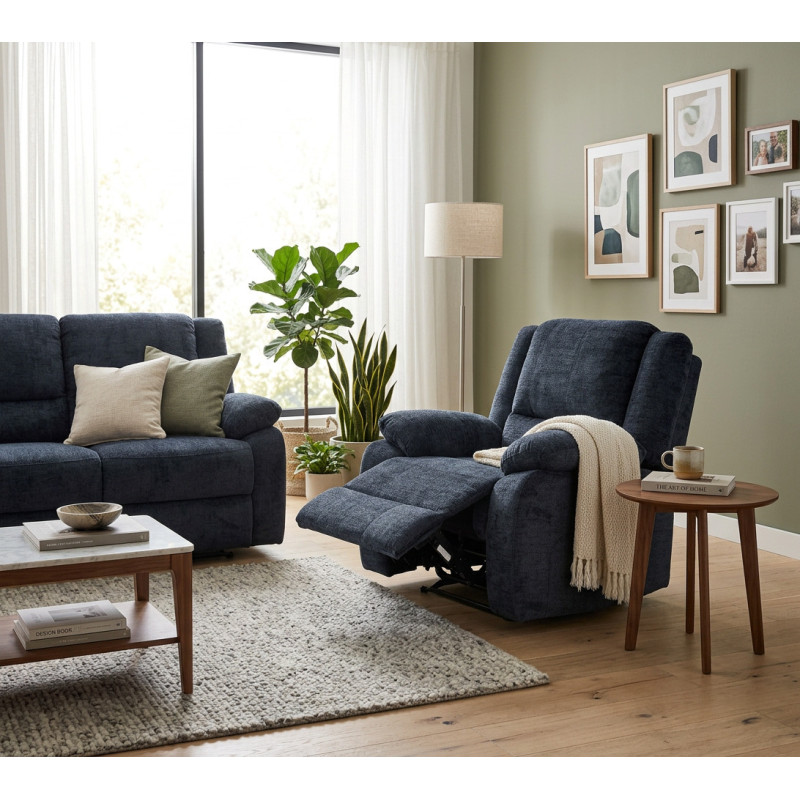
Back fatigue after a long evening in the lounge chair is rarely about the chair being 'uncomfortable'. It is usually about three specific things: no lumbar curve, a seat that is too deep, and a back angle that never changes. The Windsor recliner chair range at Austina is built around adjustable recline, which is the single biggest lever you have over how your lower back is loaded during long sitting sessions. This guide explains what ergonomic lumbar support actually does, how to judge it in a showroom or online, and which Windsor model suits which room and body.
Quick Takeaways
- Back fatigue in a recliner usually traces back to a missing lumbar curve, a seat that is too deep, or a fixed back angle.
- Lumbar support only works when the cushion sits in the inward curve of your lower back — not behind your hips or up between your shoulder blades.
- Reclining shifts load off the lumbar spine, and a footrest that actually supports your legs completes the position.
- The Windsor line runs from a single recliner through to five-seat suites, so you can match the support to the room rather than the other way around.
- Austina operates as factory direct furniture in Perth and Bunbury, with stock ready for immediate delivery and a 4.9/5 star feedback score across thousands of in-stock items.
What Actually Causes Back Fatigue in a Lounge Chair?
Back fatigue is the ache that builds gradually, not the sharp pain you would notice immediately. It comes from sustained, low-level loading of muscles and ligaments that are being asked to hold a position they were not designed to hold for hours.
When you sit in a chair with no lumbar support, your lower back flattens and your deep spinal muscles work continuously to stop you slumping. After 30 to 60 minutes, those muscles tire. That is the fatigue. The chair itself is not 'bad' — it simply is not doing any of the work for you.
The three failure points to check first
- No lumbar curve. If the backrest is a flat plane from seat to shoulder, your spine has to create its own curve and hold it.
- Seat depth that is too deep. If the seat front presses behind your knees, you will slide forward to relieve it — and once you slide forward, your back leaves the backrest entirely.
- A fixed back angle. A single upright angle suits conversation and nothing else. Reading, watching television, and napping all want different angles.
Fix those three and most of the fatigue disappears, regardless of how plush the cushions are.
How Reclining Changes the Load on Your Lower Back
Reclining is not a luxury feature — it is the mechanism that makes lumbar support work over long periods. As the backrest opens up, your body weight is progressively transferred from your spine and postural muscles onto the chair's backrest and seat surface.
Why the recline angle matters more than the cushion
An upright seat puts the majority of the load through your lumbar discs and the muscles around them. A moderately reclined position spreads that load across a much larger contact area — your whole back, your hips, and the backs of your thighs. This is why people with tired lower backs instinctively lean back. A recliner simply lets you do it properly, with support, rather than slumping sideways into an armrest.
As a general rule, a slightly reclined angle (a little past vertical) suits working, eating, or conversation. A deeper recline suits reading, television, and resting. The value of a recliner is that you can move between those positions without changing seats.
Do not overlook the footrest
An elevated leg position reduces the pull of your hamstrings on your pelvis, which in turn lets your lower back settle into its natural curve against the lumbar cushion. A recliner with a footrest that supports the calves and heels — rather than leaving the legs dangling — is doing more for your back than the backrest alone.
What to Look For in Ergonomic Lumbar Support
Lumbar support is not one feature. It is a set of measurements and adjustments that have to line up with your body. Here is a practical checklist you can apply to any recliner, including the Windsor range.
Lumbar height and curve
The support should land in the inward curve of your lower back, roughly at waist height. If it presses into your mid-back, it is too high. If it sits behind your hip bones, it is too low. Look for a backrest with a defined forward curve in that zone rather than a uniform slab of foam.
Seat depth and cushioning
When you sit back fully, there should be a small gap between the front edge of the seat and the back of your knees. Deep, soft cushions feel wonderful for ten minutes and become a problem over two hours, because you sink into them and lose the lumbar contact point. Firmer, better-shaped cushioning holds you where the support can reach you.
Head and neck support
Once you recline, your head needs somewhere to go. A backrest that ends below the neck forces your neck muscles to hold your head forward — which trades lower back fatigue for neck fatigue. Higher backrests suit deeper recline; lower backrests suit upright lounges.
Mechanism quality
A recliner is only ergonomic if it holds the position you set. Check that the mechanism moves smoothly, locks where you want it, and returns easily. On multi-seat models, each seat should recline independently so two people of different heights can both be supported at once.
Console and storage details
Small things matter for long sessions: a place for a drink, a place for the remote, and enough arm support that your shoulders are not held up by tension. Several Windsor models include a console for exactly this reason.
The Windsor Recliner Range: Matching Support to Your Room
The Windsor family covers the full span from a single armchair to a large reclining suite. The right choice depends on how many people use the room and how much wall space you have — not on which model is biggest.
Start with a single recliner
If you have one person with a tired back and a shared lounge that nobody wants to replace, a single recliner is the most efficient fix. It gives one seat proper lumbar support and full recline without changing the rest of the room.
Two seats with a shared console
A two-seater with a console suits couples who both want recline and a shared surface between them for drinks, glasses, or a remote. It is the smallest configuration that gives two people independent back support.
Buy the Windsor 2-Seater Recliner with Console
Three seats for a family lounge
A three-seater recliner sofa works when the lounge is the main gathering space. Look for independent recline per seat so a taller and a shorter person can each set their own angle and lumbar contact point.
Buy the Windsor 3-Seater Recliner Sofa
Premium and plush builds
If the recliner is going to be the most-used seat in the house, the premium and plush variants are worth comparing. They typically add refinement to the seating surface and mechanism rather than changing the footprint, so they suit buyers who want the same ergonomic position with a softer, more upholstered feel.
Buy the Windsor Premium Recliner Sofa Suite with Console
Buy the Windsor Plush Reclining Lounge Suite with Smart Console
Large suites and pocket spring support
For bigger rooms and heavier use, the larger Windsor suites add pocket spring construction and wider seating. Pocket springs are worth noting for back comfort specifically: they allow each part of the seat to compress independently, which means your hips and thighs are supported without your lower back losing contact with the lumbar zone.
Buy the Windsor 5-Seater Pocket Spring Reclining Sofa Suite
Buy the Windsor Ergonomic 5-Seater Reclining Lounge with Comfort Console
A Practical Example: Setting Up a Recliner for Daily Use
Here is how the same chair gets set up for two very different users in one household. This is the workflow worth running through before you buy, and again on delivery day.
- Sit back fully first. Before touching the recline lever, push your hips to the back of the seat. If you cannot get your lower back into contact with the lumbar zone without sliding forward, the seat is too deep for you.
- Set the upright angle for active use. Working on a laptop, eating, or talking all want a slightly reclined position — enough to take weight off the spine, upright enough to keep your head over your shoulders.
- Open the recline for passive use. For television or reading, go deeper and extend the footrest. The aim is for your thighs and calves to be supported so your pelvis can relax.
- Check the head position. If your chin drops toward your chest or your head is unsupported, add a small cushion behind the neck or reduce the recline slightly.
- Repeat for the second user. On a multi-seat recliner, set each seat independently. Two people sharing one fixed angle is the most common reason a good recliner still produces fatigue.
Common Mistakes That Undo Good Lumbar Support
Even a well-designed recliner can be set up badly. These are the mistakes that quietly cancel out the support you paid for.
- Buying for looks over fit. A recliner that is 10 cm too deep will not support your back no matter how good the mechanism is.
- Adding a thick lumbar cushion on top of built-in support. This pushes you forward off the backrest and creates a new problem. If the built-in support is close but not right, use a thin, firm roll rather than a soft pillow.
- Ignoring wall clearance. Most reclining mechanisms need space behind the chair to open. Measure before you commit to a position in the room.
- Choosing a seat count before a seat size. A five-seater that is too deep for anyone in the house is worse than a correctly fitted three-seater.
- Never changing position. The best position is the next one. Even good lumbar support is not a substitute for shifting your angle every 30 to 45 minutes.
Frequently Asked Questions
Is a recliner actually good for lower back pain?
Reclining reduces the load on your lumbar spine compared with sustained upright sitting, which is why many people find it more comfortable for long periods. That said, back pain has many causes, and a chair is not a treatment. If your pain is persistent, worsening, or radiating into your legs, speak to a health professional — a recliner can be part of a comfortable setup but should not be the plan.
What recline angle should I use?
There is no single correct number because it depends on what you are doing. A shallow recline suits active tasks, a deeper recline suits resting and watching television. The practical test is whether your lower back stays in contact with the lumbar support and your head stays supported. If either contact point is lost, adjust the angle.
How do I know if a recliner's seat is too deep for me?
Sit fully back. If there is more than a small gap between the seat edge and the back of your knees, or if you feel pressure behind the knees, it is too deep. If you slide forward to get comfortable, the lumbar support will never reach you.
Do I need one recliner or a full suite?
Buy for who actually uses the seat. One person with back fatigue and a lounge everyone else likes means a single recliner is the efficient answer. If the lounge is the household's main seating, a two or three-seater with independent recline gives everyone their own supported position.
Why buy from a factory direct retailer?
Austina sells factory direct in Perth and Bunbury, which removes the middleman markup and keeps stock ready for immediate delivery. For a large item like a reclining suite, that combination — no middleman, thousands of in-stock items, and a 4.9/5 star feedback score — is the practical advantage over ordering through a traditional retailer and waiting.
The Bottom Line
Back fatigue in the lounge is a design problem, not a personal failing. Give your lower back a defined curve to rest against, keep the seat depth right for your legs, and recline so the load spreads across the chair instead of your postural muscles — and most of the ache disappears.
The Windsor recliner range gives you that starting from a single chair and scaling up to a five-seat suite, with premium, plush, pocket spring, and ergonomic configurations to choose between. If you are in Perth or Bunbury and want to test seat depth and recline angle in person, visit and sit in each configuration — the chair that fits your body will feel obvious within a minute.
Buy the Windsor Recliner Buy the Windsor Ergonomic 5-Seater Reclining Lounge