Choosing between an upholstered bed and a wooden bed comes down to one question: do you want softness and built-in storage, or hard-wearing simplicity that lasts for decades? There is no single winner. Upholstered beds suit people who want a plush, hotel-style look, a padded headboard to lean against, and gas lift storage under the mattress. Wooden beds suit people who want a frame they can wipe clean, that will not show fabric wear, and that handles pets, kids and humid spells without complaint.
Because both styles appear at similar prices, the decision usually is not about budget — it is about how you actually use your bedroom. This guide compares upholstered and wooden beds across comfort, durability, cleaning, storage and cost, and gives you a short decision framework you can apply before you buy.
Quick Takeaways
- Upholstered beds win on comfort and storage. A padded headboard is better for reading or watching TV, and a gas lift base turns the whole bed footprint into storage.
- Wooden beds win on longevity and low maintenance. Bare timber wipes clean, resists stains and odours, and generally outlasts fabric in a busy household.
- Bedroom size often decides it. In a small room, gas lift storage can replace a chest of drawers entirely.
- Fabric choice matters as much as frame choice. A tight-weave fabric handles daily life far better than a loose, plush one.
- Compare like for like. A cheap timber frame and a cheap upholstered frame are both made to a price — check the joinery and the mechanism, not just the cover.
What Actually Separates an Upholstered Bed From a Wooden Bed
An upholstered bed has its frame and headboard wrapped in fabric or faux leather over padding. A wooden bed leaves the timber exposed. That one difference — a soft covering versus bare timber — drives almost every other trade-off you will deal with: how it feels to lean on, how easy it is to clean, how much noise it makes, how long it lasts and how much it costs.
Upholstered beds at a glance
- Padded headboard and side rails, usually over a timber or metal frame
- Fabric options ranging from linen-look weaves to velvet and faux leather
- Commonly paired with gas lift storage, where the entire mattress platform lifts up
- Softer visual footprint — no hard edges, less visual clutter in a small room
- Requires vacuuming, spot cleaning and some care with sunlight and oils
Austina's bedroom range shows how much variety sits inside this one category. It includes upholstered beds with gas lift storage and LED lighting built into the headboard, plus standalone upholstered headboards in fabric if you only want to change the look of an existing base.
Wooden beds at a glance
- Exposed timber frame, often a hardwood such as messmate, or a painted finish
- Slatted or platform bases that allow air to move around the mattress
- Easy to wipe down and hard to stain permanently
- Timber grain reads as warmer, more traditional or coastal depending on the finish
- Joints can loosen and creak over time if the frame is cheaply made
Wooden bedroom furniture also pairs easily with the rest of the room. A messmate timber bedside table, for example, sits naturally beside a timber bed in a way that a fabric bed frame does not always match.
Upholstered vs Wooden Beds: Side-by-Side Comparison
| Factor | Upholstered bed | Wooden bed |
|---|---|---|
| Comfort when sitting up | Padded headboard is comfortable without extra cushions | Hard against your back unless you add pillows |
| Cleaning | Vacuum and spot clean; stains need attention quickly | Wipe with a damp cloth; spills rarely leave a mark |
| Long-term surface wear | Fabric can fade, pill or absorb odours | Timber can be sanded, oiled or repainted |
| Built-in storage | Gas lift storage hides completely under the mattress | Drawers or separate under-bed boxes |
| Noise | Quieter when the frame is well built | Can creak if joints loosen |
| Pets and young kids | Claws and spills are a real risk | More forgiving of both |
| Weight and moving | Heavier, awkward to move upstairs | Usually lighter and easier to disassemble |
| Style flexibility | Colour and texture choices; harder to change later | Finish can be repainted; grain is fixed |
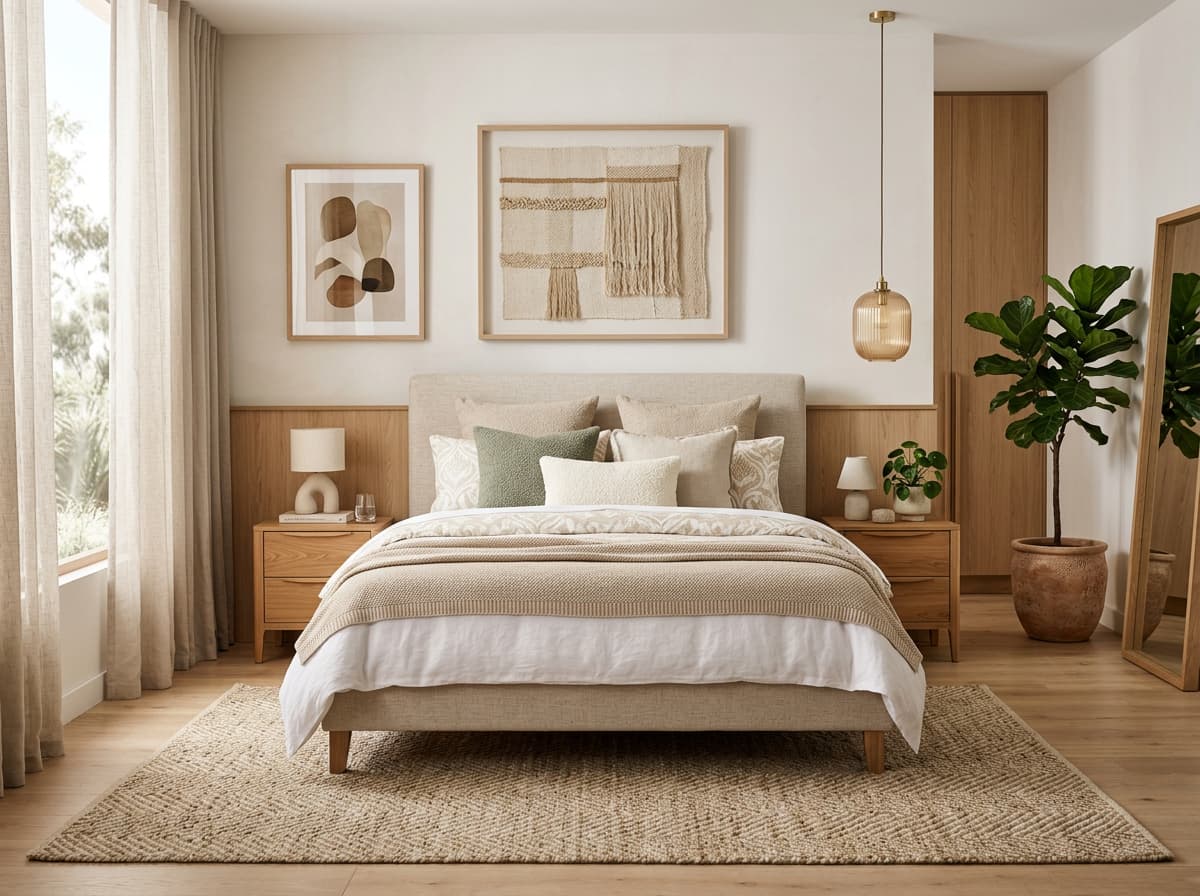
Bedroom furniture covers a wide range of frames, finishes and storage types — the right choice depends on how the room is used day to day.
When an Upholstered Bed Is the Better Choice
Choose upholstered if comfort, storage and a softer look matter more to you than wipe-clean convenience. In most homes, these three situations tip the decision.
You need storage without adding furniture
A gas lift bed raises the entire mattress platform, which means the full footprint of the bed becomes usable space. In a small bedroom, that is often the difference between a tidy room and a stack of boxes jammed into the wardrobe. You can typically store suitcases, spare bedding and off-season clothing under a queen or king frame.
This is the single strongest argument for upholstered. A wooden bed with drawers gives you storage too, but drawers only use part of the frame, and they need clearance to open — which is exactly what a tight room does not have.
You read, work or watch TV in bed
A padded headboard is simply more comfortable to lean against for any length of time. If you spend twenty minutes reading before sleep or watch a movie sitting up, an upholstered headboard removes the need to arrange pillows behind your back every night.
You want a calmer, softer room
Fabric softens both the look and the acoustics of a bedroom. Hard surfaces reflect sound, which is why a room full of bare timber and hard flooring can feel echoey. Upholstered furniture absorbs some of that. If your bedroom is heavy on hard finishes, a fabric bed helps balance it.
The honest trade-off
Fabric needs looking after. Direct sunlight fades it, body oils and sunscreen mark it, and a spill left overnight can set. If you choose upholstered, pick a tight-weave fabric in a mid-tone rather than a pale, loose weave, and treat any stain immediately.
When a Wooden Bed Is the Better Choice
Choose timber if you want a frame that shrugs off daily wear and keeps its looks with almost no effort. Three situations favour wood clearly.
You want the longest possible service life
Timber can be sanded, oiled or repainted. Fabric cannot be restored once it has faded or torn, short of reupholstering the whole frame. A solid timber bed with bolted joints can realistically outlast two or three mattresses, which changes the real cost per year.
You have pets or very young children
Claws, spilled drinks, felt-tip pens and accidents are all survivable on sealed timber. On fabric, they are not. If your household is rough on furniture, timber is the lower-stress option.
You prefer natural materials and airflow
Slatted timber bases let air circulate under the mattress, which helps prevent moisture build-up. That matters more in humid or coastal conditions. If you are near the coast, where salt air and damp winters are part of life, a breathable timber base is a sensible default.
The honest trade-off
Timber is unforgiving to sit against and can creak as joints settle. Buying a frame with proper corner bracing and bolted connections, rather than dowels and glue alone, is what separates a bed that lasts from one that squeaks within a year.
Four Factors Buyers Usually Forget
1. Mattress compatibility
Most mattresses work on both frame types, but a heavy mattress on a gas lift mechanism puts more strain on the struts. Check the mechanism's rated load, and if you are buying a new mattress at the same time, look at the options in the same trip. Austina stocks mattresses, bases and ensembles alongside bedroom frames, and it also carries adjustable beds with mesh tops, which suit a different kind of sleeper entirely.
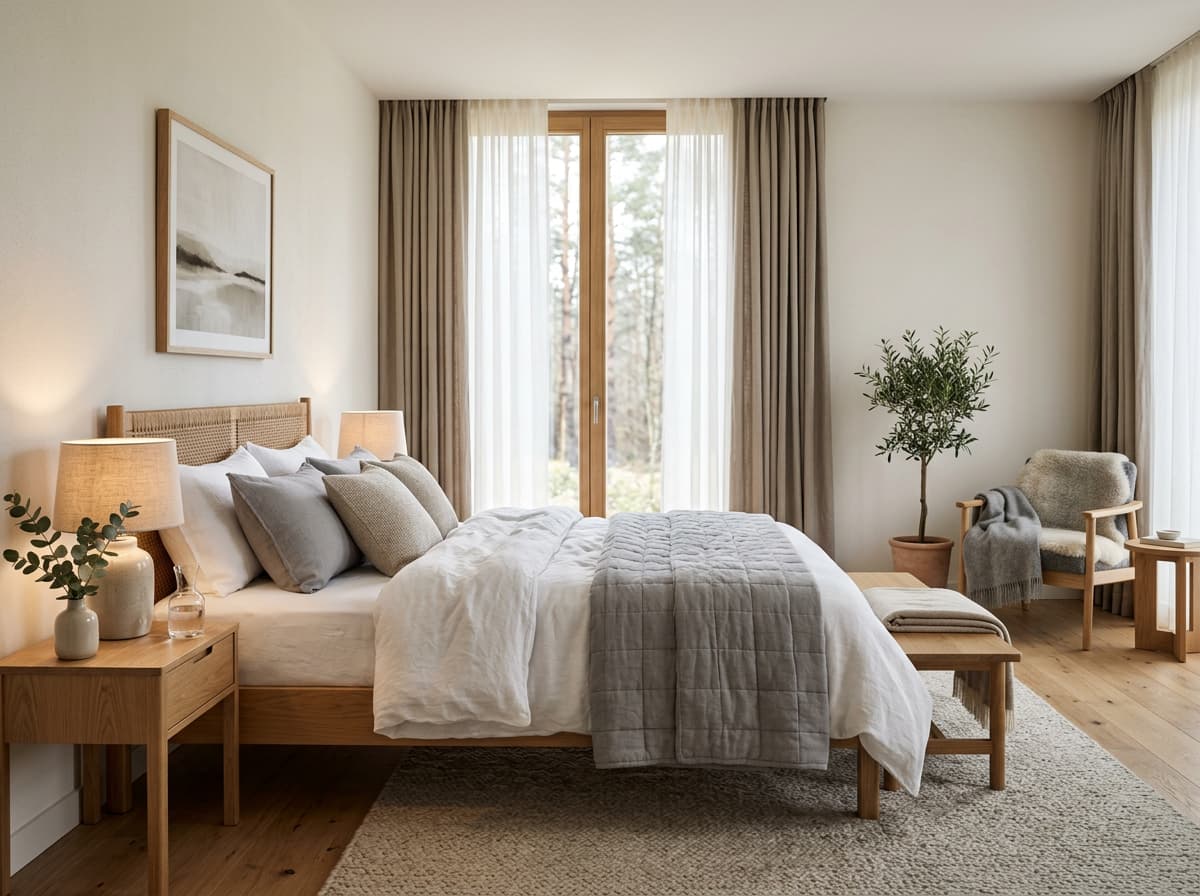
Matching the mattress to the frame matters more than most buyers expect, especially with gas lift mechanisms.
2. Room layout and clearance
Measure the wall you plan to use, then add the headboard, the frame and any bedside tables. Soft upholstered edges are friendlier in a room where you squeeze past the bed, while hard timber corners tend to catch shins in tight spaces.
3. Weight and access
Upholstered beds are heavier and bulkier. If you live upstairs in an older Perth home with a narrow staircase, factor in how the frame will actually get to the room before you commit.
4. Cleaning reality, not cleaning theory
Most people overestimate how often they will vacuum a fabric bed and underestimate how often they will wipe a timber one. Be honest about your habits. A five-minute weekly vacuum is realistic for some households and pure fiction for others.
A Five-Question Decision Framework
Work through these in order. The first question you answer yes to usually settles it.
- Do you need under-bed storage? If yes, a gas lift upholstered bed is the most space-efficient answer.
- Do you sit up in bed regularly? If yes, a padded headboard earns its place.
- Do you have pets or children under five? If yes, lean towards timber or a very durable tight-weave fabric.
- Does the room get strong direct sun? If yes, timber will hold its colour better than most fabrics.
- Is the room small or awkward to move furniture into? If yes, choose the lighter, simpler frame.
What Actually Drives the Price
Two beds can look similar and cost very differently because of what is hidden inside. The main cost drivers are:
- Timber type and joinery — solid hardwood with bolted corner blocks costs more than particleboard with cam locks, and lasts considerably longer.
- Fabric and padding — upholstery grade, rub count and foam density all add cost.
- Storage mechanism — a gas lift frame adds struts, hinges and a reinforced base.
- Headboard height and shape — tall, curved or channel-stitched headboards use more material.
Where you buy also matters. Austina has been a factory direct furniture business for over 40 years, operating in Perth and Bunbury with no middleman markup and thousands of in-stock items, and holds a 4.9 out of 5 feedback rating. That model means a gas lift upholstered bed can land under $1,000 at warehouse pricing, which is roughly what you would pay elsewhere for a basic timber frame. That comparison is the reason it is worth pricing both options at the same retailer rather than assuming timber is automatically the cheaper route.
Frequently Asked Questions
Are upholstered beds hard to clean?
They need more attention than timber but are not difficult. Vacuum the fabric monthly with a brush attachment, treat spills immediately with a clean cloth and mild detergent, and rotate the mattress to spread wear. Avoid harsh chemicals, which can set stains rather than lift them.
Do wooden beds squeak more than upholstered ones?
They can, but squeaking is a build-quality problem rather than a timber problem. A frame with bolted joints, corner bracing and a well-supported slat base stays quiet. Upholstered frames hide joints behind padding, which can mask early movement you would otherwise notice.
Which is better for a small bedroom?
Upholstered, usually. A gas lift base gives you storage across the entire bed footprint without needing clearance to open drawers, and softer edges are easier to live with in a tight room.
Do upholstered beds sag or lose shape?
The frame rarely sags; the cushioning and fabric are what change over time. Lower-density foam compresses and looser weaves stretch. A firm, high-density foam layer under a tight-weave fabric holds up far better.
Which lasts longer overall?
On the frame alone, a solid timber bed lasts longest because it can be refinished. On comfort and storage, upholstered wins. If you plan to keep the same bed for 15 years, timber is the safer bet. If you will change styles in five, the difference matters less.
Can I use the same mattress on both?
Yes, in most cases. Just confirm the load rating on a gas lift mechanism if your mattress is particularly heavy, and check whether the frame needs a slatted base or a solid platform.
The Bottom Line
An upholstered bed is the better choice if you want a padded headboard, hidden gas lift storage and a softer, quieter room. A wooden bed is the better choice if you want a frame that wipes clean, survives pets and kids, and can be refinished instead of replaced.
If you are still undecided, answer question one of the framework above: storage. In most small and medium bedrooms, that single factor decides the purchase. Browse the bedroom furniture collection to compare upholstered and timber frames side by side, or look at decorator items and interior design pieces if you want help tying the frame into the rest of the room.