The Martindale rating is a number that tells you how many rubs a fabric can withstand before showing visible wear. It's the single most cited fabric durability rating in the upholstery world, and for good reason—it gives you a quick, comparable benchmark for how long a fabric might last on a specific piece of furniture. But it only measures abrasion resistance, not overall fabric quality. In this guide, we'll walk through what the test actually does, map specific rating ranges to real furniture use cases, and explain why chasing the highest number isn't always the right call.
Quick Takeaways: Martindale Rating Explained
- Under 10,000 rubs: Light decorative use only—accent chairs, occasional seating, spaces without daily use.
- 15,000–25,000 rubs: Regular home use—living room sofas and dining chairs in households without heavy wear.
- 25,000–30,000 rubs: Heavy domestic use—family sofas, homes with pets or children, high-traffic living areas.
- 30,000+ rubs: Commercial and contract use—hotels, offices, rental properties, and public spaces.
- The catch: The Martindale test only measures abrasion resistance. It doesn't account for fading, pilling, seam strength, or how easy the fabric is to clean.
- Higher isn't always better: Over-specifying durability can mean sacrificing softness, breathability, and budget on pieces that don't need it.
What Is the Martindale Rub Test?
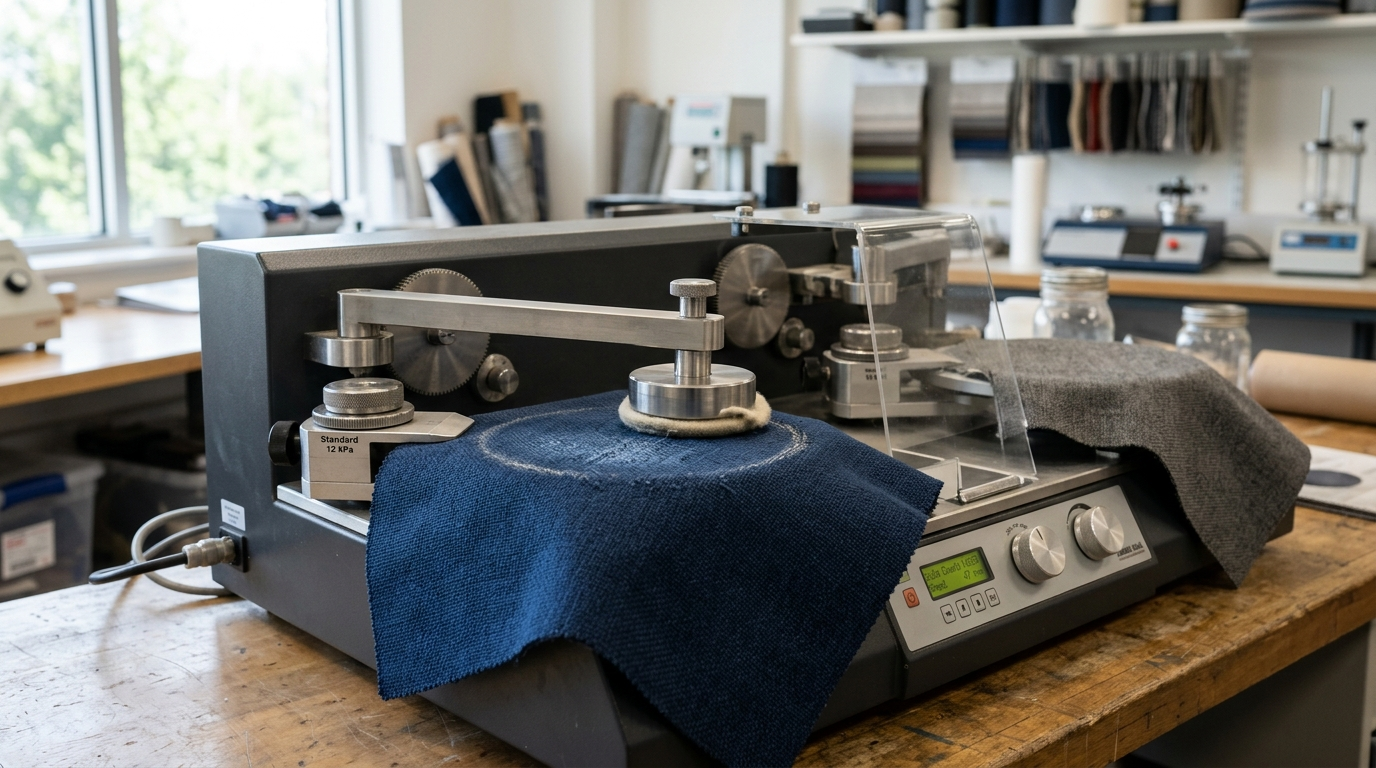
The Martindale rub test is a standardized laboratory procedure that measures fabric abrasion resistance. A machine rubs a piece of worsted wool or abrasive pad against the fabric in a figure-eight motion, simulating the friction a seat cushion or backrest experiences over time. The test continues until two yarn breaks occur or the fabric shows visible wear—whatever comes first. The number of cycles completed at that point becomes the fabric's Martindale rating.
So when you see a fabric listed as "25,000 Martindale rubs," it means the material survived 25,000 abrasion cycles before failing. The higher the number, the more resistant the fabric is to surface wear from rubbing. It's widely used across Europe and internationally, making it one of the most reliable ways to compare upholstery fabrics apples-to-apples.
How the Test Works in Practice
The test machine uses a standard abrasive material and applies consistent pressure. Technicians inspect the fabric at intervals—often every 5,000 or 10,000 cycles—to check for signs of breakdown. The endpoint is defined by either the appearance of yarn breaks or a visible change in the fabric surface that would be unacceptable in normal use.
This means the rating reflects a specific kind of stress: repeated surface friction. It's an excellent proxy for how a fabric will hold up when people sit, shift, stand up, and slide across it day after day. But as we'll cover later, it's not a complete picture of upholstery fabric quality.
Martindale Rating Tiers: Which Number Fits Your Furniture?
Not every piece of furniture needs the same level of abrasion resistance. A decorative accent chair that gets sat in once a week has very different demands than a family room sofa that hosts movie nights, nap time, and a golden retriever. Here's how to map Martindale ratings to real-world furniture use cases.
Under 10,000 Rubs: Light Decorative Use
Fabrics rated under 10,000 Martindale rubs are best suited for pieces that are primarily visual rather than functional. Think of a tufted accent chair in a formal living room, a bench at the foot of a bed that rarely gets sat on, or dining chairs used only for occasional dinner parties.
These fabrics tend to be softer, more delicate, and often more visually interesting—think silk blends, lightweight linens, or textured wovens. They're not built for daily friction, and that's okay when the piece is more about aesthetics than utility. The trade-off is that they'll show wear quickly if used regularly, so be honest about how much action the piece will actually see.
15,000–25,000 Rubs: Regular Home Use
This is the sweet spot for most standard household furniture. A 15,000 to 25,000 rating covers the majority of living room sofas, armchairs, and dining chairs in homes without extreme wear conditions. If you're a couple or small household with normal daily use, this range will serve you well.
Fabrics in this tier balance durability with comfort. They're typically soft enough to feel inviting, yet tough enough to handle everyday sitting, standing, and shifting. Many mid-range upholstery lines fall here, including common polyester blends, cotton-linen mixes, and lighter-weight velvets.
25,000–30,000 Rubs: Heavy Domestic and Family Use
If your sofa is the center of family life—kids climbing, pets napping, snacks being eaten, and daily movie marathons—this is your minimum target. Fabrics rated 25,000 to 30,000 Martindale rubs are designed for heavy domestic use and can take significantly more punishment before showing signs of wear.
This range often includes tighter weaves, performance fabrics, and heavier synthetics. They may feel slightly less plush than lower-rated options, but the payoff is longevity. If you're choosing fabric for a sofa you plan to keep for a decade, this tier gives you the best balance of resilience and liveability.
30,000+ Rubs: Commercial and Contract Use
Fabrics rated above 30,000 Martindale rubs are built for commercial and contract environments. These are the fabrics you'll find in hotel lobbies, office waiting areas, restaurant booths, and rental properties. They're engineered to withstand constant, varied use from hundreds of different people over years.
For a rental property or a heavily used vacation home, this tier makes sense. For a typical residential sofa, it's often overkill. The fabrics tend to be stiffer, less breathable, and more expensive—trade-offs that aren't worth it unless the piece will face genuinely commercial-level traffic.
Why a Higher Martindale Number Isn't Always Better
It's tempting to look at the scale and think, "I'll just buy the highest rating I can find." More durability is always better, right? Not necessarily. Over-specifying fabric abrasion resistance comes with real trade-offs that can make your furniture less comfortable, more expensive, and less suited to its actual purpose.
Trade-Off: Fabric Feel and Softness
Fabrics engineered for extreme abrasion resistance often use tighter weaves, heavier yarns, or synthetic coatings. These make the fabric tougher, but they can also make it stiffer and less pleasant to touch. A 40,000-rub commercial fabric on a reading chair might feel like you're sitting on a conference room partition rather than a cozy armchair.
If the piece is meant for relaxation, the tactile experience matters. A fabric that's slightly less durable but much softer may be the better choice for a bedroom bench or a living room armchair that gets moderate use.
Trade-Off: Breathability and Temperature
Heavy-duty fabrics, especially those with synthetic backings or dense constructions, can trap heat. In a warm climate or a sunny room, a 35,000-rub fabric might feel noticeably hotter and less comfortable than a 20,000-rub linen blend. Breathability affects how the furniture actually feels in daily use—and no one wants a sofa that makes them sweat.
Trade-Off: Cost vs. Need
Higher Martindale ratings generally come with higher price tags. If you're upholstering a decorative side chair that gets sat in once a month, paying a premium for 30,000+ rub rating doesn't make financial sense. The money you save by choosing a mid-range fabric could go toward a better frame, higher-quality foam, or a second piece of furniture.
When to Actually Upgrade
Upgrading to a higher rating is worth it when the piece will face genuine, sustained wear. A family room sofa, a dining chair used three meals a day, or furniture in a rental property all justify the investment. The key is matching the rating to the real-world demands of the piece—not just buying the highest number available.
What the Martindale Test Doesn't Measure
The Martindale rating is a powerful tool, but it's a single metric. It tells you how a fabric handles abrasion and nothing else. If you rely on it exclusively, you might end up with a fabric that's rub-resistant but fails in other ways that matter just as much to your daily experience.
Fading and Lightfastness
The Martindale test doesn't measure how well a fabric resists fading from sunlight. A fabric could score 30,000 rubs and still bleach out in a south-facing window within a year. If your furniture will sit in a bright room, check the fabric's lightfastness rating separately—often expressed on a scale of 1 to 8, with 6 or higher being suitable for indoor use near windows.
Pilling and Surface Fuzzing
Pilling—those annoying little balls of fuzz that form on fabric surfaces—isn't captured by the Martindale test. A fabric can be highly abrasion-resistant and still pill badly, especially in the first few months of use. Look for fabrics tested for pilling (often rated on a 1–5 scale) if this is a concern, particularly with blends that mix natural and synthetic fibers.
Seam Strength and Tear Resistance
How a fabric holds up at the seams and how resistant it is to tearing are separate properties. A fabric might pass a high Martindale rating but tear easily if snagged, or fail at seam lines under stress. This matters especially for upholstered pieces with tight pulls, curved shapes, or high-load areas like seat edges.
Cleanability and Stain Resistance
Perhaps the biggest gap: the Martindale test says nothing about how easy a fabric is to clean. A 25,000-rub fabric might absorb red wine like a sponge, while a 15,000-rub performance fabric might repel it entirely. If you have kids, pets, or a tendency to eat on the couch, stain resistance and cleanability should be just as high on your checklist as abrasion resistance.
What to Check Beyond the Martindale Number
- Lightfastness rating: Essential for sunny rooms and south-facing windows.
- Pilling rating: Important for blended fabrics and high-contact seating.
- Stain treatment or performance coating: Look for terms like "stain-resistant," "wipe-clean," or specific treatments like Nano-Tex or Crypton.
- Seam strength data: Often available from the manufacturer for contract-grade fabrics.
- Fiber content: Natural fibers breathe better; synthetics often resist stains better. Blends aim for both.
How to Choose Sofa Fabric: A Practical Decision Framework
Now that you understand what the Martindale rating does and doesn't tell you, here's a practical framework for choosing the right fabric for your specific situation. This approach works whether you're buying a ready-made sofa or specifying fabric for a custom commission.
Step 1: Assess the Real Traffic Level
Be honest about how the piece will be used. A formal living room sofa that guests sit on twice a month is not the same as a family room couch that's the household's second bed. Write down who uses it, how often, and what they do there—eating, napping, pets, kids, shoes on or off. This honest assessment is your starting point.
Step 2: Set Your Minimum Martindale Rating
Based on your traffic assessment, set a floor—not a ceiling. If it's a decorative piece, 10,000 to 15,000 may be fine. For a daily-use family sofa, aim for 25,000 minimum. For a rental or commercial space, 30,000+. Don't overshoot this number unless the trade-offs (feel, breathability, cost) are worth it to you.
Step 3: Check the Other Quality Markers
Once you've narrowed your options to fabrics that meet your Martindale minimum, evaluate the other factors. Check lightfastness if the piece is near windows. Look at pilling ratings if the fabric is a blend. Ask about stain resistance if food or pets are involved. Consider the fiber content for breathability and maintenance.
Step 4: Touch and Feel the Fabric in Person
Numbers are useful, but they can't replace the experience of sitting on the fabric. If possible, request swatches and live with them for a few days. Rub them, spill something on them (on a corner), leave them in the sun, and see how they feel against bare skin. A fabric that looks perfect on paper might feel wrong in real life.
Step 5: Balance Durability with Everything Else
The best fabric choice is the one that balances durability with comfort, aesthetics, cleanability, and budget. Don't let a single number drive the entire decision. Use the Martindale rating as a filter, not a final answer.
Frequently Asked Questions

Is a 20,000 Martindale rating good for a sofa?
Yes, for most households. A 20,000 rating is suitable for regular home use on a living room sofa that doesn't face extreme daily wear. If you have young children, multiple pets, or the sofa will be the primary seating for a busy household, consider moving up to the 25,000–30,000 range for added longevity.
What is a good Martindale rating for a dining chair?
Dining chairs experience more friction than people realize—people slide in and out, and the seat edge takes repeated stress. For everyday dining chairs, aim for at least 15,000–20,000. If the chairs are used for long meals, homework sessions, or in a busy kitchen, 25,000+ is a safer bet.
Does a higher Martindale rating mean the fabric is better quality?
No. A higher Martindale rating means the fabric is more resistant to abrasion, which is just one aspect of quality. A fabric could have a 40,000 rating and still fade in sunlight, pill after a few months, or be impossible to clean. True upholstery fabric quality depends on multiple factors, including fiber content, weave construction, finish treatments, and how the fabric performs across all relevant tests.
Can I use a fabric rated under 10,000 for a sofa?
You can, but it's not recommended for a sofa that will see regular use. Fabrics under 10,000 are best for decorative pieces or occasional seating. On a daily-use sofa, they'll show wear quickly and may need reupholstering within a year or two. If you love a fabric with a low rating, consider using it on throw pillows or a bench cushion rather than the main seating surface.
What's the difference between Martindale and Wyzenbeek tests?
Both test abrasion resistance, but they use different methods. The Martindale test uses a figure-eight rubbing motion with a wool abradant, while the Wyzenbeek test uses a back-and-forth motion with cotton duck or wire mesh. Martindale is more common in Europe; Wyzenbeek is more common in the United States. A rough equivalence is that 15,000 Martindale cycles is comparable to about 15,000–30,000 Wyzenbeek double rubs, but the tests aren't directly interchangeable.
Conclusion: Match the Number to Your Life
The Martindale rating is one of the most useful tools available when you're choosing upholstery fabric—but it's a starting point, not a final verdict. Use it to set a minimum durability threshold based on how the furniture will actually be used, then evaluate the remaining candidates on comfort, cleanability, fading, pilling, and cost.
For a decorative accent chair, 10,000 to 15,000 may be plenty. For a family room sofa, aim for 25,000 or above. For a rental property or commercial space, 30,000+ is the right call. But don't let the number override your own experience—touch the fabric, test a swatch, and make sure it feels right for the way you actually live.
Before your next upholstery purchase, write down the piece's use case, set your Martindale minimum, and then ask about lightfastness, pilling, and stain resistance. That simple checklist will help you choose fabric that looks great, feels comfortable, and stands up to the life you actually live.
When you set your Martindale minimum, compare fabrics in the lounge furniture range, including everyday pieces such as the Dune 2.5-Seater Sofa.