When you see a leather sofa labeled "genuine leather," it sounds like a mark of quality. In reality, that phrase is one of the most misleading terms in the furniture industry. Having leather grades explained properly means looking past the marketing label and understanding how each grade of leather actually performs over time — specifically, what it will look like in three to five years of daily use.
The three grades you'll encounter most often are full-grain, top-grain, and bonded leather. Each one ages differently, reacts differently to spills and scratches, and carries a very different long-term value. This guide breaks down the real-world lifecycle of each type so you can make a purchase you'll still be happy with years from now.
Quick Takeaways: Leather Grades at a Glance
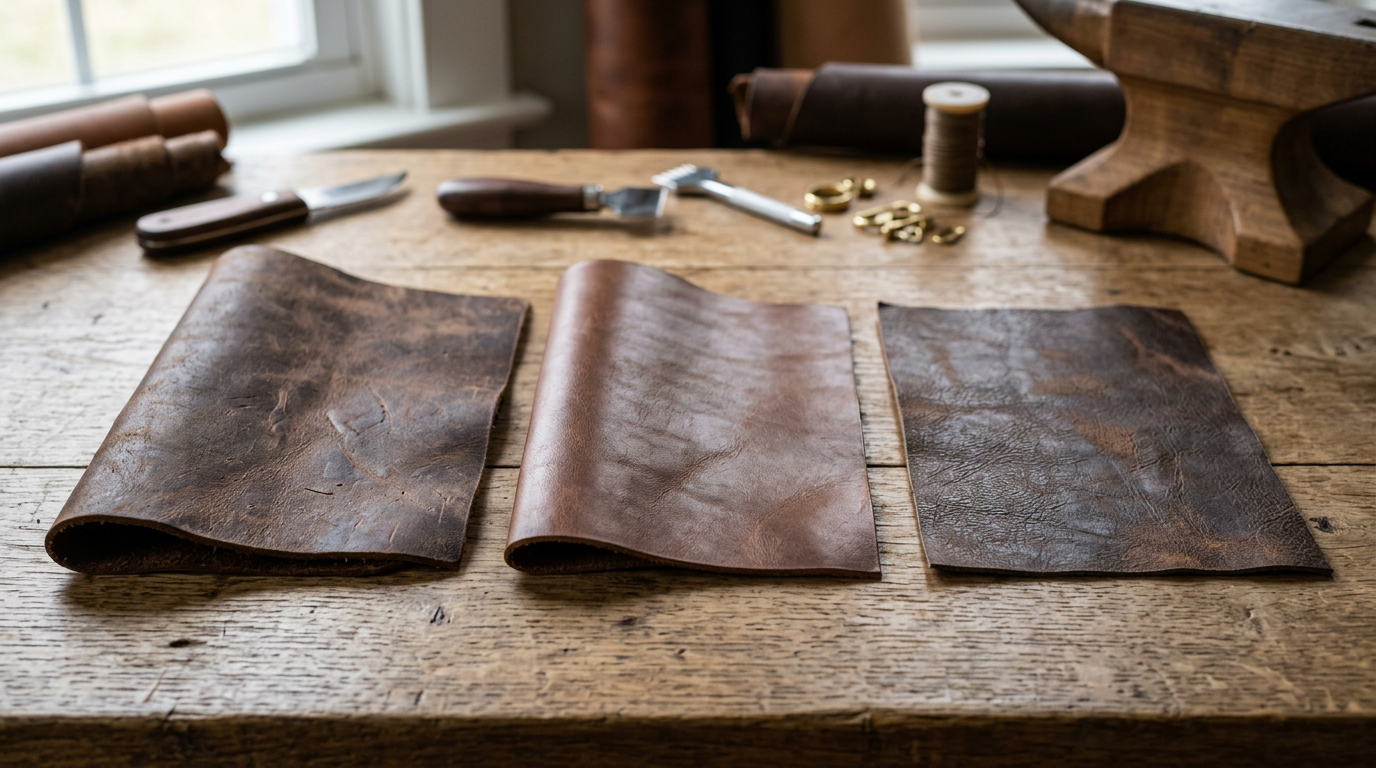
- Full-grain leather is the highest quality. It keeps the natural grain intact, develops a rich patina, and lasts decades.
- Top-grain leather is sanded and corrected for a uniform look. It resists stains well but doesn't develop the same patina.
- Bonded leather is made from scraps and fibers bonded with polyurethane. It peels and cracks within a few years.
- "Genuine leather" is a marketing term, not a quality grade. It often refers to bonded or split leather.
- Water, scratches, and daily wear affect each grade in very different ways.
Why "Genuine Leather" Is Often a Warning Sign, Not a Selling Point
If you're shopping for furniture and see a tag that says "genuine leather," your instinct might be to trust it. Unfortunately, this phrase is one of the most misunderstood terms in the industry. In leather grading, "genuine" does not mean authentic, premium, or high-quality. It simply means the product contains some real leather material — and that material is often the lowest usable grade.
Here's the problem: the term "genuine leather" is frequently applied to bonded leather products. Bonded leather is made by shredding leather scraps and leftover fibers, then mixing them with polyurethane or latex binders and pressing the mixture onto a backing. The result is a material that contains some leather but behaves more like synthetic upholstery.
The Bonded Leather Reality
Bonded leather typically contains anywhere from 10% to 90% actual leather fibers, with the rest being binders and plasticizers. Because there's no industry standard requiring manufacturers to disclose the exact percentage, consumers are left in the dark. A product labeled "genuine leather" could be mostly polyurethane with a small amount of leather fiber mixed in.
When you're comparing bonded leather vs real leather, the differences become obvious within the first year or two of use. Bonded leather begins to peel at stress points — seat cushions, armrests, and backrests. The surface coating separates from the fiber backing, creating flakes and cracks that cannot be repaired. Once this peeling starts, it accelerates quickly.
How to Spot the Misleading Label
When evaluating a product, look beyond the "genuine leather" tag. Here's a quick checklist:
- Price point: If a full leather sofa costs less than $800–$1,000, it's almost certainly bonded or heavily coated leather.
- Surface texture: Bonded leather has a repeating, embossed grain pattern that looks identical across the entire surface. Real leather has natural variation.
- Edge appearance: Look at the edges of cushions or seams. Bonded leather often shows a fabric-like or fibrous backing. Full-grain and top-grain leather have solid, consistent edges.
- Smell: Bonded leather has a chemical, plastic-like odor. Quality leather has a rich, earthy smell.
Understanding these distinctions is the foundation of any solid leather furniture buying guide. If the label says "genuine leather" but the price, texture, and smell all point to bonded material, you're looking at a product with a short usable lifespan.
Full-Grain Leather: How It Ages Over 3 to 5 Years
Full-grain leather is the top tier of leather quality. It comes from the outermost layer of the hide and retains the complete, natural grain surface. Nothing is sanded, buffed, or corrected to remove imperfections. This matters because the natural grain contains the tightest, most durable fiber structure in the hide.
When you're weighing full grain vs top grain leather, the key difference comes down to what happens to the surface. Full-grain keeps its natural texture; top-grain has been sanded down. That single manufacturing choice changes everything about how the leather ages.
The Patina Process
Over three to five years of regular use, full-grain leather develops what's called a patina. A patina is a gradual darkening and softening of the leather surface that comes from natural oils in your skin, minor friction, and exposure to light and air. This isn't damage — it's the leather's natural aging process, and it's actually prized by leather enthusiasts.
Here's what happens year by year:
- Year 1: The leather begins to soften slightly at contact points. You may notice slight darkening on armrests or seat edges where hands and bodies rest most often.
- Year 2: The surface develops visible character marks — minor scuffs become part of the leather's story rather than permanent damage. The color deepens subtly.
- Year 3: A distinct patina is visible. Areas of frequent contact are noticeably darker and smoother. The leather feels supple and lived-in.
- Year 5: The leather has a rich, warm tone that looks intentionally aged in the best possible way. It feels personal and unique to your use patterns.
How Full-Grain Handles Water, Scratches, and Wear
Full-grain leather's tight fiber structure makes it naturally resistant to water. A small spill that's wiped up quickly won't penetrate the surface. Over time, minor water exposure can even contribute to the patina. However, full-grain leather is not waterproof — prolonged exposure to liquid will eventually soak through.
Scratches are where full-grain truly shines. A scratch on full-grain leather can often be buffed out with your fingertip. The natural oils in the leather help redistribute around minor abrasions. Deeper scratches become part of the patina rather than ruining the surface.
For daily wear, full-grain is the most durable option. The natural grain hasn't been compromised by sanding, so the structural integrity of the hide remains intact. This is why full-grain leather goods — whether sofas, jackets, or bags — can last 15 to 30 years or more with proper care.
Top-Grain Leather: The Sanded Surface and Its Long-Term Tradeoff
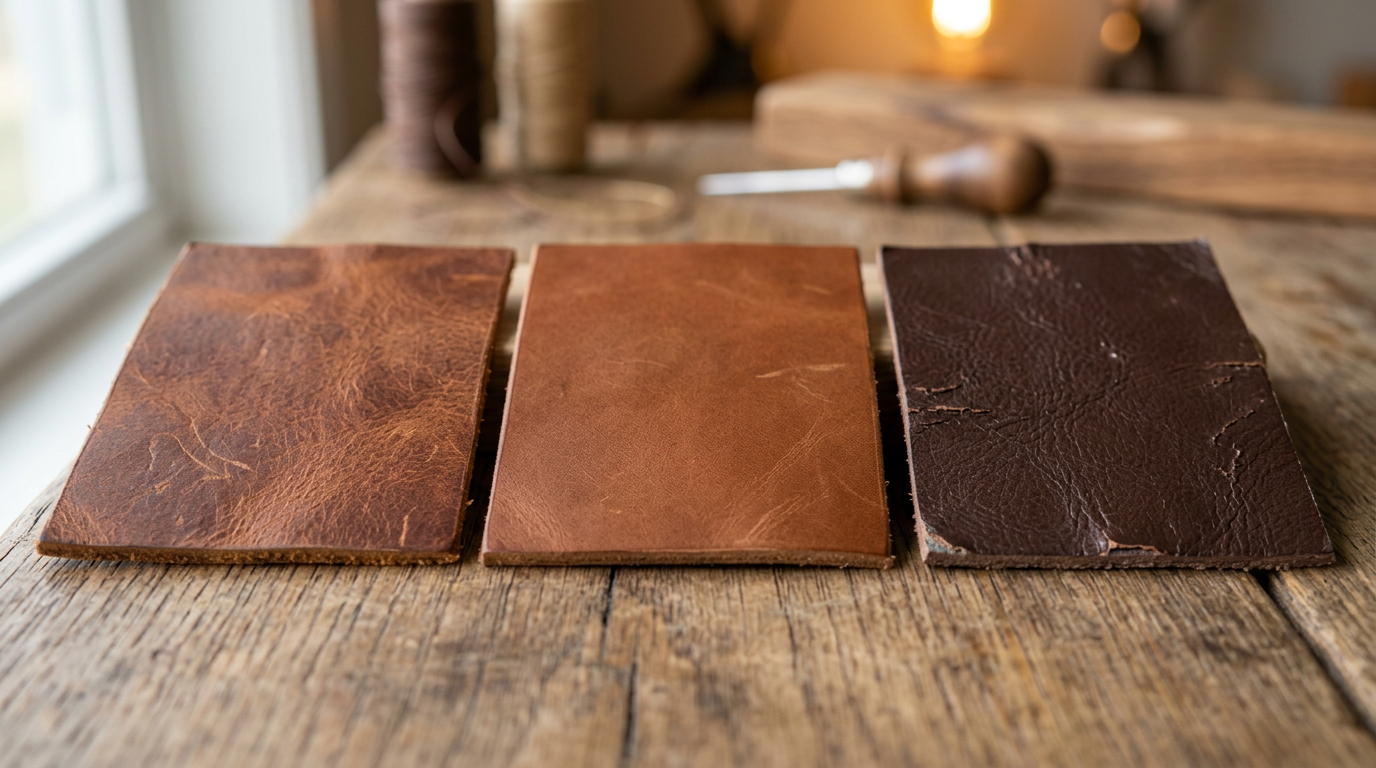
Top-grain leather comes from the same outer layer of the hide as full-grain, but with one critical difference: the surface has been sanded or buffed to remove imperfections, then finished with a protective coating. This process creates a more uniform appearance and makes the leather more stain-resistant out of the box. But it also removes the tightest part of the grain structure.
When considering the types of leather for sofas, top-grain is often presented as the practical middle ground — more affordable than full-grain, but far superior to bonded leather. That assessment is generally accurate, but it's important to understand how top-grain changes over time.
What Sanding Does to the Leather's Future
The sanding process removes the topmost layer of the grain, where the fibers are most tightly packed. What remains is still genuine, durable leather, but it has a slightly looser fiber structure at the surface. The protective coating applied after sanding compensates for this by providing a consistent barrier against stains and spills.
Over three to five years, here's what you can expect from top-grain leather:
- Year 1: The leather looks nearly identical to day one. The protective coating resists most spills and prevents visible wear.
- Year 2: Minor fading may appear at high-contact areas, but the uniform finish keeps the overall appearance consistent.
- Year 3: The surface coating may show slight wear at stress points — particularly seat edges and armrests. Unlike full-grain, these marks don't blend into a patina.
- Year 5: The leather still looks good overall, but areas of heavy use may show a slightly worn, less vibrant finish. The surface doesn't deepen or develop the same richness as full-grain.
The Patina Tradeoff
The most significant difference between full-grain and top-grain over time is the patina. Because top-grain's surface has been sanded and coated, it doesn't absorb oils and develop the same natural aging. The protective finish is designed to resist the very things that create a patina.
This isn't necessarily a bad thing. If you prefer a sofa that looks the same in year five as it did in year one, top-grain is the better choice. If you want leather that tells a story and deepens with character, full-grain is the way to go. It's a matter of preference, not a clear quality hierarchy.
How Top-Grain Handles Water, Scratches, and Wear
Top-grain leather handles water better than full-grain in the short term. The protective coating causes spills to bead up on the surface, giving you more time to wipe them away before any absorption occurs. However, once the coating is compromised — by a deep scratch or years of friction — that water resistance diminishes.
Scratches are more visible on top-grain because they disrupt the uniform coating. A scratch on top-grain doesn't buff out the way it does on full-grain. Instead, it creates a visible mark in the finish that remains unless professionally repaired.
For daily wear, top-grain performs well. It's a solid choice for families, pet owners, and anyone who wants leather furniture that's relatively low-maintenance while still being a genuine, durable product.
Bonded Leather: What Happens After Year Two
Bonded leather is where expectations and reality diverge most sharply. A bonded leather sofa can look attractive and feel comfortable when new. The surface can be embossed with a convincing grain pattern, and the initial feel under hand is leather-like. But this surface is a thin coating over a composite of fibers and binders — and that coating has a limited lifespan.
The Peeling Timeline
Here's what typically happens with bonded leather over time:
- Year 1: The sofa looks good. Minor stretching may occur at seat cushions, but the surface remains intact.
- Year 2: Hairline cracks begin to appear at stress points — where the seat cushion meets the frame, along seam lines, and on armrests. The surface coating starts to separate from the fiber backing.
- Year 3: Peeling begins in earnest. Small flakes of the surface coating come off, revealing the fibrous backing underneath. The peeling accelerates once it starts because the exposed edges catch on clothing and skin.
- Year 5: Large sections of the surface have peeled away. The sofa looks worn, damaged, and unattractive. The exposed backing is uncomfortable and continues to shed fibers.
Water, Scratches, and Wear on Bonded Leather
Bonded leather handles water poorly. The polyurethane coating repels liquid initially, but once the surface cracks — and it will — water penetrates the fiber backing and causes it to swell and break down further. There's no recovery from this type of damage.
Scratches are immediately visible and permanent. Unlike full-grain leather, there's no natural oil movement to help repair surface damage. A scratch on bonded leather cuts through the coating and exposes the composite underneath.
For daily wear, bonded leather simply isn't built to last. It's a budget material designed to look like leather for a short period. If you're trying to figure out how to tell quality leather furniture from budget options, the presence of bonded leather — regardless of how it's labeled — is the clearest signal that the product won't stand the test of time.
Practical Comparison: Which Leather Grade Fits Your Lifestyle?
Choosing the right leather grade isn't just about quality — it's about matching the material to how you actually live. Here's a practical framework for making that decision.
Choose Full-Grain If You:
- Want furniture that lasts 15+ years and develops character over time
- Appreciate natural variation and a patina that reflects your use
- Are willing to perform occasional conditioning and maintenance
- Have a higher budget for quality furniture
Choose Top-Grain If You:
- Want a consistent, clean look that stays uniform over time
- Need better stain and spill resistance for a busy household
- Want genuine leather quality at a more accessible price point
- Prefer low-maintenance materials
Avoid Bonded Leather If You:
- Want furniture that lasts more than 2–3 years
- Expect the surface to remain intact under normal daily use
- Want a product that can be repaired if damaged
- Are investing in a piece you plan to keep long-term
How to Test Leather Quality Before You Buy
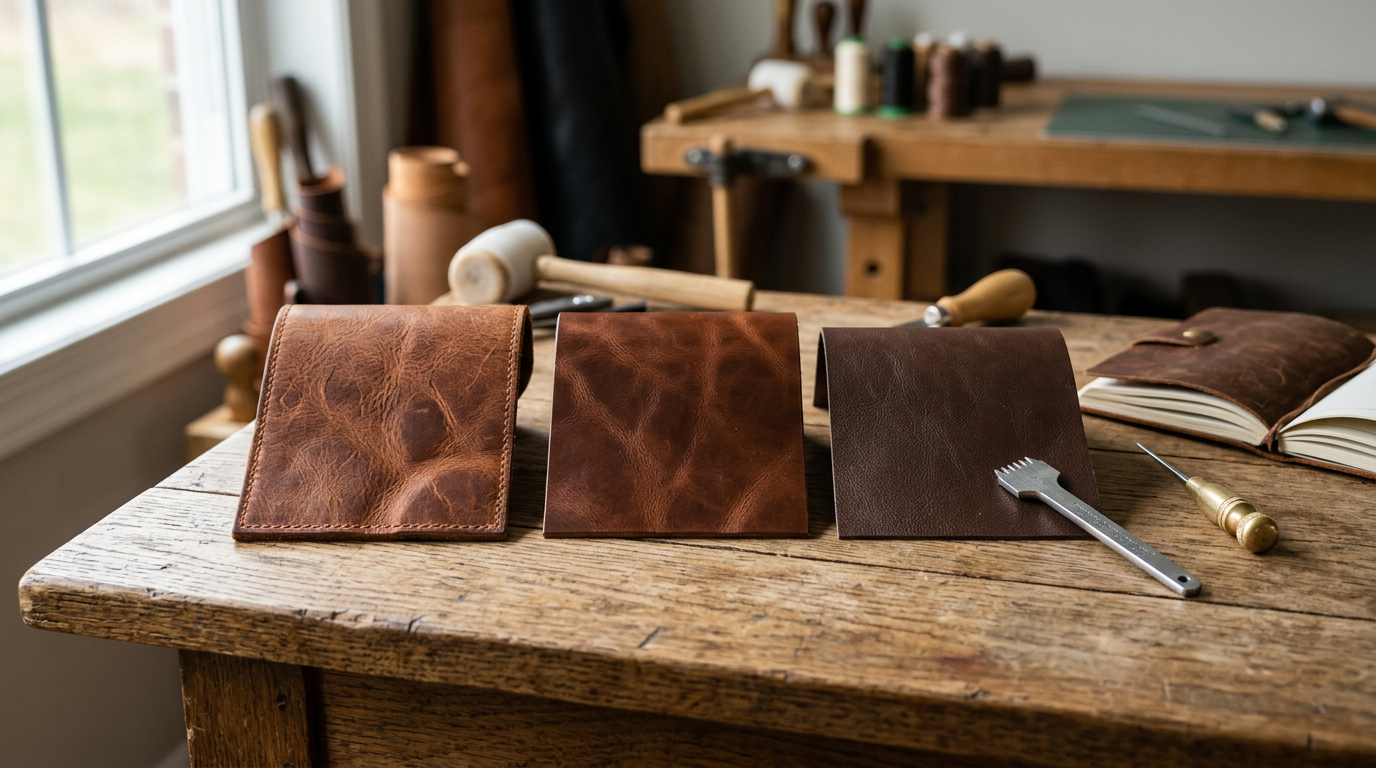
If you're standing in a showroom or shopping online, you can use a few practical tests to assess leather quality before committing to a purchase.
The Press Test
Press your finger firmly into the leather surface. On full-grain leather, you'll see the grain pattern shift and wrinkle naturally around your fingerprint. On top-grain leather, the surface may give slightly but the coating prevents the same natural wrinkling. On bonded leather, the surface feels rigid and doesn't move much — it sits on top of the composite backing without the flexibility of a real hide.
The Backing Inspection
If you can access the underside of a cushion or an unzipped cover, look at the back of the leather. Full-grain and top-grain leather have a suede-like, fibrous backing that's clearly part of the hide. Bonded leather has a fabric or mesh backing with the composite material pressed onto it.
The Temperature Test
Real leather absorbs and retains temperature. It feels cool to the touch initially and warms with body heat. Bonded leather, with its high polyurethane content, tends to feel more like plastic — it doesn't regulate temperature the same way.
Frequently Asked Questions About Leather Grades
Is "genuine leather" the same as full-grain leather?
No. "Genuine leather" is a generic marketing term that simply means the product contains some real leather material. It does not indicate quality. Full-grain leather is a specific grade — the highest quality — that retains the natural grain surface of the hide. Many products labeled "genuine leather" are actually made from bonded leather or split leather, which are significantly lower in quality.
Can bonded leather be repaired once it starts peeling?
Generally, no. Once the surface coating of bonded leather begins to peel, the damage is progressive and cannot be effectively reversed. There are repair kits that can patch small areas temporarily, but they don't address the underlying structural breakdown of the material. The peeling will continue to spread.
Does full-grain leather require special maintenance?
Full-grain leather requires some basic care to perform at its best over the long term. This includes occasional conditioning with a leather conditioner to keep the material supple, wiping up spills promptly, and keeping the furniture out of direct prolonged sunlight to prevent uneven fading. The maintenance is minimal compared to the lifespan you get in return.
Why is there such a big price difference between leather grades?
The price difference reflects the raw material availability and manufacturing process. Full-grain leather comes from the best portion of the hide and requires careful selection — only a percentage of hides are suitable for full-grain use. Top-grain uses similar material but with additional processing. Bonded leather uses leftover scraps and fibers, making it far cheaper to produce. You're paying for material quality, durability, and longevity.
Can I tell the difference between full-grain and top-grain by looking?
It can be difficult to tell them apart visually when both are new. Full-grain leather will show natural imperfections — insect bites, scars, and variation in the grain pattern. Top-grain leather has a more uniform, consistent surface because those imperfections have been sanded away. Over time, the difference becomes more apparent as full-grain develops a patina and top-grain maintains its original appearance.
Conclusion: Invest in the Leather That Matches Your Timeline
Understanding leather grades isn't about memorizing definitions — it's about knowing what you're buying and how it will serve you over time. Full-grain leather offers unmatched durability and a patina that makes the piece uniquely yours, lasting decades with proper care. Top-grain leather provides a practical balance of quality, consistency, and stain resistance at a more accessible price. Bonded leather, despite its appealing initial price, has a short lifespan and will need replacement within a few years.
When you're making a furniture investment, think in terms of cost per year of use rather than upfront price. A $3,000 full-grain leather sofa that lasts 20 years costs $150 per year. A $700 bonded leather sofa that needs replacement in three years costs $233 per year — and you end up with a worn, peeling piece of furniture in the meantime.
Before your next purchase, use the tests and frameworks in this guide. Press the leather, inspect the backing, and ask direct questions about the grade. A reputable retailer should be able to tell you exactly what you're buying — and if they can't, that's information in itself.
If you are comparing leather and fabric lounges, browse the lounge furniture range and ask about the cover and the support underneath before you buy.