Furnishing a living room under $3,000 is entirely possible without ending up with a room that looks like a college dorm or furniture that falls apart in a year. The secret is knowing exactly where each dollar should go—and where cutting costs will quietly sabotage you three years down the line. This guide gives you a receipt-style budget breakdown across every essential living room category, with specific product recommendations, material quality benchmarks, and honest trade-off analysis so you can spend confidently.
Quick Takeaways
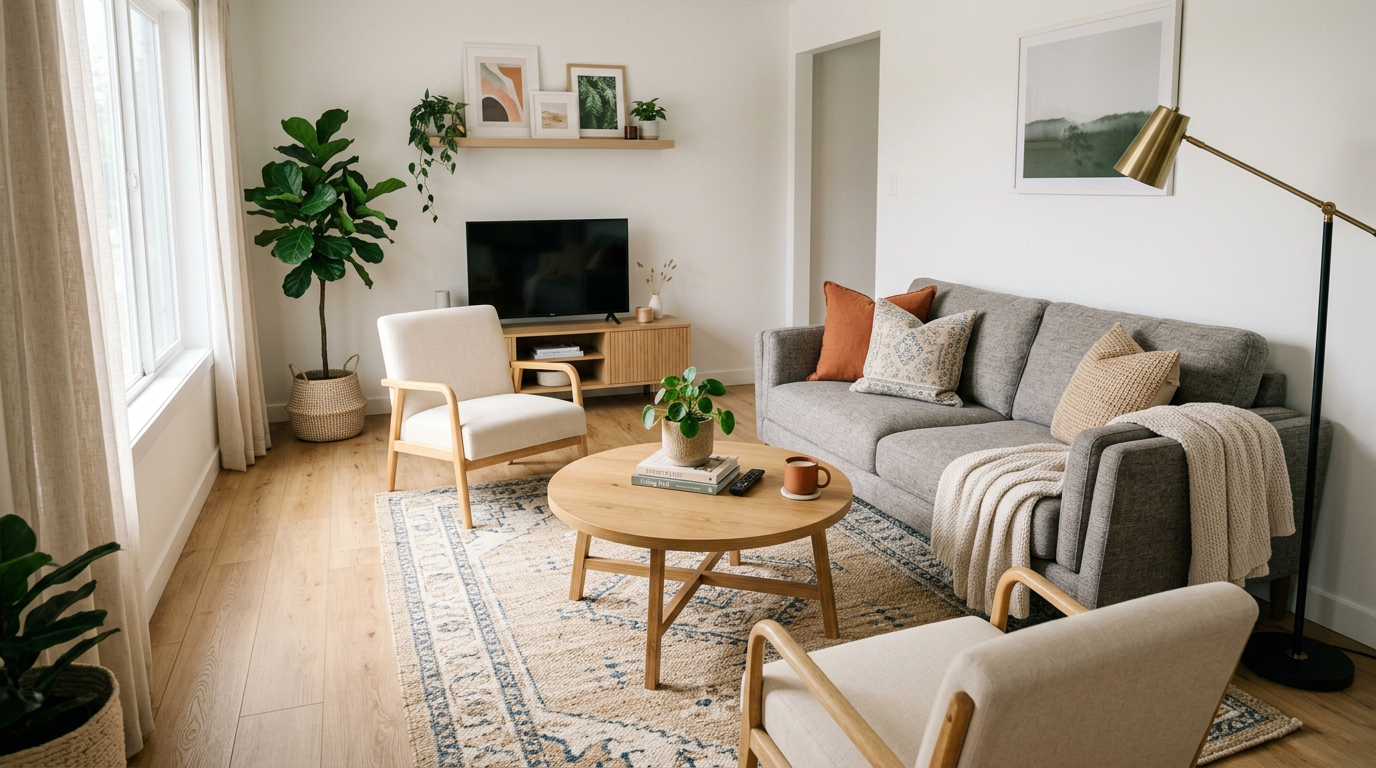
- The sofa is your single biggest investment: Allocate roughly 40% of your budget here because frame construction and upholstery durability matter most.
- Rugs and lighting deserve real money too: A cheap rug sheds, flattens, and looks dingy fast. Good lighting transforms even budget furniture.
- Saving on side tables, decor, and art is safe: These items don't bear structural weight, so affordable options perform nearly as well as expensive ones.
- Material benchmarks matter more than brand names: Look for kiln-dried hardwood frames, high-resilience foam, and hand-tufted or flat-woven rugs.
- Buy multi-functional pieces: Storage ottomans, nesting tables, and sleeper sofas stretch your dollar further.
The $3,000 Living Room Budget Breakdown
Here is exactly how to split $3,000 across the essential categories of a fully furnished living room. These ratios are based on what delivers the most daily comfort and visual impact per dollar spent.
| Item | Budget | % of Total |
|---|---|---|
| Sofa | $1,200 | 40% |
| Accent Chair | $350 | 12% |
| Area Rug (8x10) | $400 | 13% |
| Coffee Table | $250 | 8% |
| Side Tables (2) | $200 | 7% |
| Lighting (floor lamp + table lamp) | $200 | 7% |
| TV Stand / Media Console | $250 | 8% |
| Decor (pillows, throw, art, plants) | $150 | 5% |
| Total | $3,000 | 100% |
Why These Ratios Work
The sofa gets the largest allocation because it is the most-used piece of furniture in the room and the most expensive to replace. A well-built sofa lasts 7–10 years; a cheap one starts sagging in 18 months. The rug gets the second-largest share because it anchors the entire room visually and takes heavy foot traffic. Lighting gets a meaningful but not enormous slice because a single well-placed floor lamp can transform a room more than a $400 side table ever will.
Decor gets the smallest allocation because pillows, throws, and wall art are areas where you can genuinely cheap out without anyone noticing—especially if you shop secondhand or use framing tricks to elevate inexpensive prints.
Where to Splurge: The Sofa
If there is one item in your living room where cutting costs will hurt you long-term, it is the sofa. A $400 sofa from a big-box retailer will typically have a particleboard frame, low-density foam cushions, and upholstery that pills and tears within a year. You will spend more replacing it than you would have spent buying a quality piece once.
What to Look for in a $1,200 Sofa
At the $1,000–$1,300 price point, you are not getting a hand-crafted heirloom, but you can get genuinely solid construction if you know what to check:
- Frame material: Kiln-dried hardwood (oak, maple, or beech). Avoid particleboard, MDF, or "engineered wood" frames.
- Joinery: Look for corner-blocked, dowelled, or screwed joints. Avoid frames held together by staples or glue alone.
- Cushion fill: High-resilience (HR) foam with a density of at least 1.8 lbs/cubic foot. Better yet, look for foam wrapped in a down blend or fiber wrap for softness without sagging.
- Upholstery: Look for fabrics with a rub count (Martindale or Wyzenbeek) of 15,000+ for residential use. Performance fabrics like Sunbrella, Crypton, or Revolution are excellent at this price point.
- Suspension: Sinuous springs (also called no-sag springs) are standard at this price. Hand-tied coil springs are better but rare under $1,500.
Specific Sofa Recommendations Around $1,200
Article Sven: A popular mid-century modern option at around $1,000–$1,300 depending on configuration. It features a kiln-dried hardwood frame, high-resilience foam cushions, and a range of fabric options including performance velvet. The Sven is widely regarded as one of the best values in direct-to-consumer furniture.
Burrow Nomad: Starting around $1,000–$1,400 depending on fabric and size. The Nomad features a modular design (you can add or remove seats later), stain-resistant fabric options, and a built-in USB charger in some configurations. The frame is kiln-dried hardwood and the cushions use high-resilience foam.
IKEA Vimle: At $800–$1,200 depending on cover and size, the Vimle offers a solid frame, removable washable covers, and a 10-year guarantee on the frame. Pair it with a higher-end cover (IKEA offers multiple fabric grades) and you have a durable, serviceable sofa. The advantage here is that replacement covers are cheap and easy to swap.
Trade-off analysis: At $1,200, you are giving up hand-tied coil springs, premium down-wrapped cushions, and high-end designer fabrics. But you are getting a sofa that will hold up to daily use for 5–8 years with proper care. Spending less than $800 on a sofa is where quality drops off a cliff.
Where to Save Smart: Accent Seating
An accent chair is important for completing your seating arrangement, but it does not need to match the sofa's build quality. Most accent chairs are used occasionally—guest seating, a reading nook, or a visual counterpoint to the sofa. This is where you can comfortably spend $300–$400.
Accent Chair Recommendations Around $350
West Elm Modern Curve Chair: Often on sale for $300–$400. It features a solid wood frame and a range of upholstery options. The cushion density is lower than a primary sofa, but perfectly adequate for occasional use.
Article Orb: Around $399. A mid-century barrel chair with a solid wood frame and durable upholstery. It looks more expensive than it is and pairs well with the Sven sofa.
IKEA Strandmon: At $279–$329, this wingback chair has been in IKEA's lineup for years because it offers surprising comfort and durability for the price. The frame is solid wood and the covers are removable.
The Rug: Why $400 Is the Sweet Spot
A living room rug is one of the most common places where people make a costly mistake—either by spending too little and getting a rug that looks flat and cheap, or by overspending on a rug that does not materially improve the room. At $400, you can get a rug that looks expensive, wears well, and anchors the room.
What to Look for in a $400 Rug (8x10)
- Material: Wool is the gold standard for durability, stain resistance, and appearance retention. At $400 for an 8x10, you can find hand-tufted wool rugs. Avoid synthetic fibers (polypropylene, polyester) for primary living spaces—they flatten and look cheap within a year.
- Construction: Hand-tufted is the best value at this price. Flat-woven (kilim) rugs are also excellent and tend to be more affordable. Avoid machine-made shag rugs—they shed and mat down quickly.
- Pile density: Press your finger into the rug. If you can easily feel the backing, the pile is too low quality. A good hand-tufted wool rug should feel dense and springy.
- Backing: Look for cotton canvas backing on hand-tufted rugs. Avoid rugs with latex backing that can degrade and crumble over time.
Rug Recommendations Around $400
Ruggable: Known for washable rugs, Ruggable's premium line includes wool-blend options in the $300–$500 range. The washable cover system is practical for homes with pets or children, though the pile is thinner than traditional hand-tufted wool.
Surya and Loloi (via Wayfair, Amazon, or direct): Both brands offer hand-tufted wool rugs in the $350–$500 range for 8x10. Look for their wool collections specifically—both brands make synthetic rugs too, so check the material listing.
Overstock / Wayfair clearance: Both retailers frequently discount hand-tufted wool rugs from $600+ down to $300–$400. Filter by material (wool) and construction (hand-tufted) to find the best values.
Trade-off analysis: A $400 hand-tufted wool rug will last 5–10 years with regular vacuuming and occasional professional cleaning. A $100 polypropylene rug will look worn in 12–18 months. The rug is the second most important investment after the sofa—do not skimp here.
Tables: Where You Can Safely Save
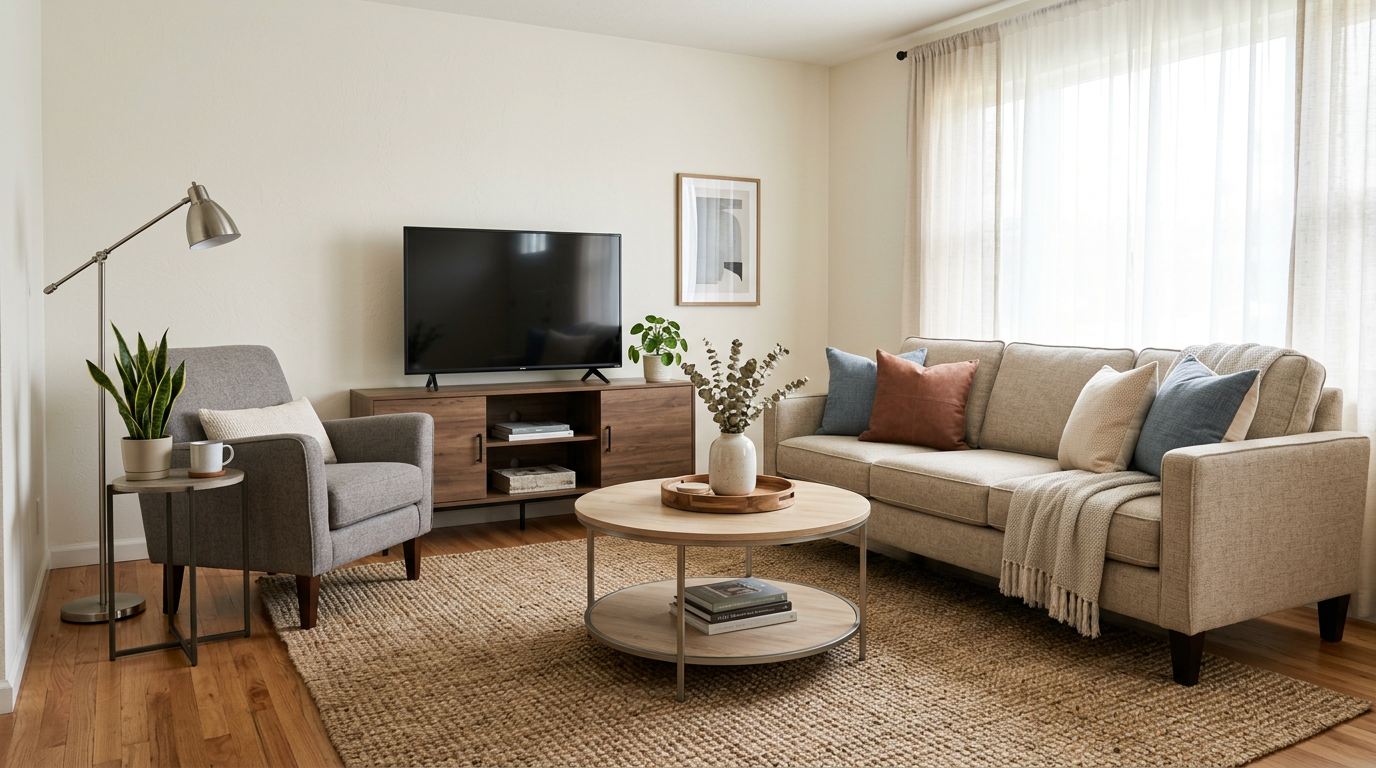
Coffee tables and side tables are areas where you can genuinely save money without sacrificing much. A side table does not bear significant weight, does not get sat on, and is primarily a visual element. The same is true for a coffee table, as long as it is structurally sound enough to hold drinks, books, and a tray.
Coffee Table Recommendations Around $250
CB2 Peekaboo Acrylic Coffee Table: Around $250. A clear acrylic table makes a small room feel larger and works with any decor style. It is virtually indestructible and easy to clean.
Article Cyla: Around $299. A marble-and-steel coffee table that looks far more expensive than it is. The marble is genuine (though thinner than high-end slabs) and the steel base is sturdy.
IKEA LACK Coffee Table: At $39–$80, this is the ultimate budget pick. It will not impress anyone, but it is functional, lightweight, and easy to replace. If you are running tight on budget, this is the first place to cut.
Side Table Recommendations Around $100 Each
CB2 Peekaboo Acrylic Side Table: Around $130. Matches the coffee table version and adds a modern touch without visual weight.
Target Threshold Mixed Material Side Table: Around $80–$120. Solid wood tops with metal legs—surprisingly good quality for the price.
Wayfair's Alcott Hill collection: Side tables in the $60–$120 range with solid wood construction and simple designs that blend with most decor.
Lighting: The Secret to Making Budget Furniture Look Expensive
Lighting is the most underrated element of living room design. A $1,200 sofa in a room with a single overhead ceiling light looks flat and uninviting. The same sofa with a warm floor lamp and a table lamp looks like a magazine spread. Budget $200 for lighting and you will transform the entire room.
Lighting Recommendations Around $200 Total
Floor lamp ($100–$120): Look for the Brightech Maxwell LED Floor Lamp ($100–$130) for a modern look, or the IKEA NOT floor lamp ($50) if you need to save more. The key is to get a lamp that provides ambient (upward) light, not just task light.
Table lamp ($60–$80): The Target Threshold Ceramic Table Lamp ($35–$50) is an excellent value. Pair it with a warm LED bulb (2700K) for a cozy glow. CB2 and West Elm also have good options in the $60–$100 range during sales.
Bulbs matter: Use 2700K (warm white) LED bulbs at 800+ lumens. The wrong color temperature can make even expensive furniture look harsh and uninviting.
TV Stand and Media Console: Function Over Flash
A media console needs to support the weight of a TV, hide cables, and provide some storage. It does not need to be a statement piece. Budget $250 and focus on solid construction and cable management.
Media Console Recommendations Around $250
Article Copen: Around $299. A solid wood media console with a slatted front that looks mid-century and provides good cable management.
West Elm Mid-Century Mini Console: Often on sale for $250–$300. Solid wood construction with a simple, clean design.
Walker Edison Furniture Company (via Amazon or Wayfair): Media consoles in the $150–$250 range with tempered glass doors and metal frames. Not heirloom quality, but functional and attractive.
Decor: The Final 5%
With $150 left for decor, you might think the room will look bare. In reality, this is the easiest category to stretch. Decor is where creativity matters more than budget.
How to Stretch $150 on Decor
- Throw pillows ($50 for 2): Buy pillow covers from Etsy or Amazon ($10–$15 each) and stuff them with down-alternative inserts ($10 each). This gives you custom-looking pillows for a fraction of retail.
- Throw blanket ($30): IKEA's polar fleece throws ($15–$25) or Target's Threshold blankets ($25–$35) look great draped over a sofa arm.
- Wall art ($40–$50): Print high-resolution images from free sources like the Metropolitan Museum of Art's open-access collection, or buy digital prints from Etsy ($5–$10 each) and frame them with IKEA RIBBA frames ($15–$25 each).
- Plant ($20–$30): A single snake plant or pothos in a ceramic planter adds life and color. Buy the plant from a local nursery (often cheaper than big-box stores) and the planter from a thrift store.
Common Mistakes When Furnishing a Living Room on a Budget
Mistake 1: Buying a Matching Furniture Set
Matching sofa-loveseat-coffee table-end table sets look dated and generic. Instead, buy pieces that complement each other through color and material, but vary in style. A mid-century sofa with a modern acrylic coffee table and a traditional rug creates visual interest that a matching set never will.
Mistake 2: Buying a Rug That Is Too Small
A 5x7 rug under a full-sized sofa looks like a bath mat. For a standard living room, you need at least an 8x10 rug—and ideally a 9x12 if your room is larger. The front legs of your sofa and accent chair should sit on the rug. This is a non-negotiable design rule that makes a room look intentional.
Mistake 3: Ignoring Lighting Until Last
People often spend their entire budget on furniture and have nothing left for lighting, leaving the room lit by a single harsh overhead fixture. Budget for lighting early. Even a $400 room looks better with good lighting than a $5,000 room with bad lighting.
Mistake 4: Choosing Form Over Function on the Sofa
A beautiful sofa that is uncomfortable will never be used. Always sit on a sofa (or read multiple reviews about comfort specifically) before buying. A firm sofa will soften over time; a too-soft sofa will sag and never recover.
Mistake 5: Overspending on Decor Before Furniture
It is tempting to buy art, pillows, and plants first because they are fun and affordable. But decor should be the last thing you buy, once you know the colors, textures, and proportions of your furniture. Buy furniture first, then choose decor that ties it together.
Living Room Furniture Checklist
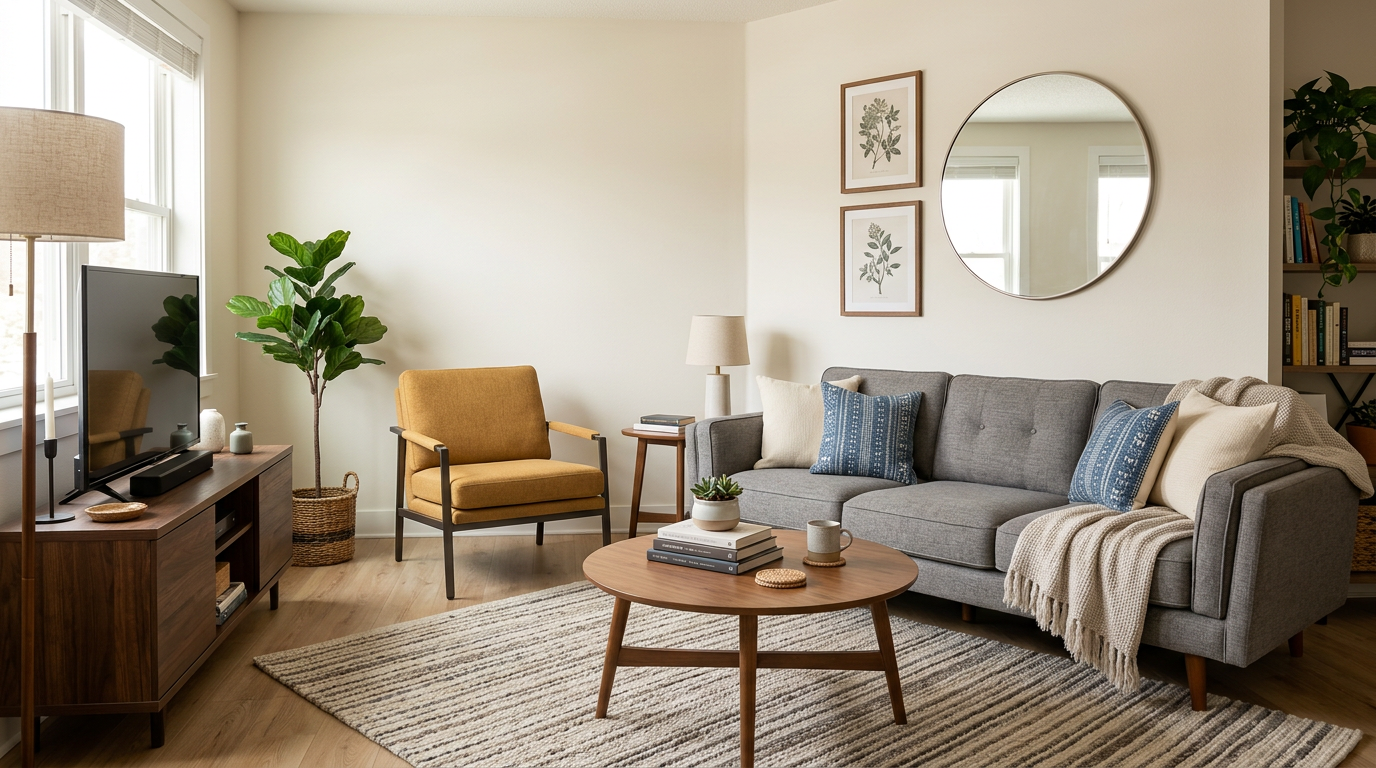
Use this checklist to make sure you have covered every essential before you start shopping:
- Sofa or primary seating — Measure your room first. A standard 84-inch sofa fits most living rooms; a 72-inch sofa works for smaller spaces.
- Accent chair or secondary seating — One additional seat for guests or reading.
- Area rug — 8x10 minimum for a standard living room. 9x12 for larger rooms.
- Coffee table — Should be about two-thirds the length of your sofa and 14–18 inches from the sofa front.
- Side table(s) — One per seating position. Height should match the sofa arm.
- Floor lamp — For ambient lighting. Place it near the sofa or in a dark corner.
- Table lamp — For task lighting and layered light. Place on a side table.
- Media console / TV stand — Sized to the room, not to the TV. Should be at least as wide as your TV.
- Throw pillows (2–3) — In colors that complement but do not match the sofa.
- Throw blanket — Draped over the sofa arm or folded on the coffee table.
- Wall art (1–3 pieces) — Hung at eye level (center at 57 inches from the floor).
- One plant — Real or high-quality faux. Adds warmth and life.
Frequently Asked Questions
Can I really furnish a living room under $3,000 without it looking cheap?
Yes. The key is prioritizing the sofa and rug (which are the most visible and most-used items) and saving on tables, decor, and lighting where quality differences are less noticeable. By following the budget ratios above and choosing materials wisely, your room will look like it cost $5,000–$7,000.
What is the single most important piece to invest in?
The sofa. It is the largest visual element in the room, the most-used piece of furniture, and the most expensive to replace. A good sofa at $1,200 will outlast a $500 sofa by three to four times, making it the better long-term value.
Is it better to buy everything at once or piece by piece?
Buying piece by piece allows you to spread out spending and find better deals, but it risks a room that feels incomplete for months. If you can afford it, buy the sofa, rug, and coffee table first—these three items make the room functional and visually complete. Add the accent chair, lighting, and decor over the following weeks or months.
Are direct-to-consumer brands like Article and Burrow actually good quality?
For the price point ($1,000–$1,400 sofas), yes. They offer solid kiln-dried hardwood frames, high-resilience foam, and performance fabric options that compete with furniture costing 2–3 times more from traditional retailers. The trade-off is limited customization and no in-person showroom experience.
How do I know if a rug is good quality without seeing it in person?
Check three things: material (wool is best for durability), construction (hand-tufted or flat-woven), and pile density (described as "high pile" or "medium pile" with a weight of 30+ oz/sq yard). Read reviews specifically about shedding and flattening. A good wool rug will shed for the first few weeks and then stop—this is normal. A synthetic rug that sheds continuously is a sign of poor quality.
Where should I shop for affordable quality furniture?
For sofas: Article, Burrow, and IKEA (higher-end lines like Vimle). For rugs: Wayfair, Overstock, Ruggable, and direct from brands like Surya and Loloi. For tables: CB2, Target Threshold, and Wayfair. For lighting: Target, IKEA, and CB2. For decor: Etsy, thrift stores, and IKEA. Always check for sales—most direct-to-consumer brands run promotions every 6–8 weeks.
Conclusion
Furnishing a living room under $3,000 is not about cutting corners—it is about cutting the right corners. By investing roughly 40% of your budget in a well-built sofa, 13% in a quality wool rug, and meaningful amounts in lighting and accent seating, you create a foundation that looks intentional and lasts for years. By saving on side tables, decor, and media consoles—items where the gap between budget and premium is barely perceptible—you free up dollars for the pieces that actually matter.
The next step is simple: measure your room, decide on a style direction, and start with the sofa. Everything else falls into place once you have the anchor piece. Use the budget breakdown above as your receipt, and shop with confidence knowing that affordable quality furniture is not a myth—it is a matter of knowing where to look and what to prioritize.
Use the same budget split when you browse the lounge furniture range and, if you also need a table and chairs, the dining furniture range.