If you want to furnish a living room under $3,000 without sacrificing quality, the secret lies in strategic budget allocation. By spending the majority of your budget on high-traffic items like a durable sofa and a high-quality rug, while saving on accent pieces like side tables and decor, you can create a stylish, long-lasting space. This practical guide breaks down exactly how to divide your $3,000 budget and highlights where to find affordable quality furniture that looks anything but cheap.
Quick Takeaways
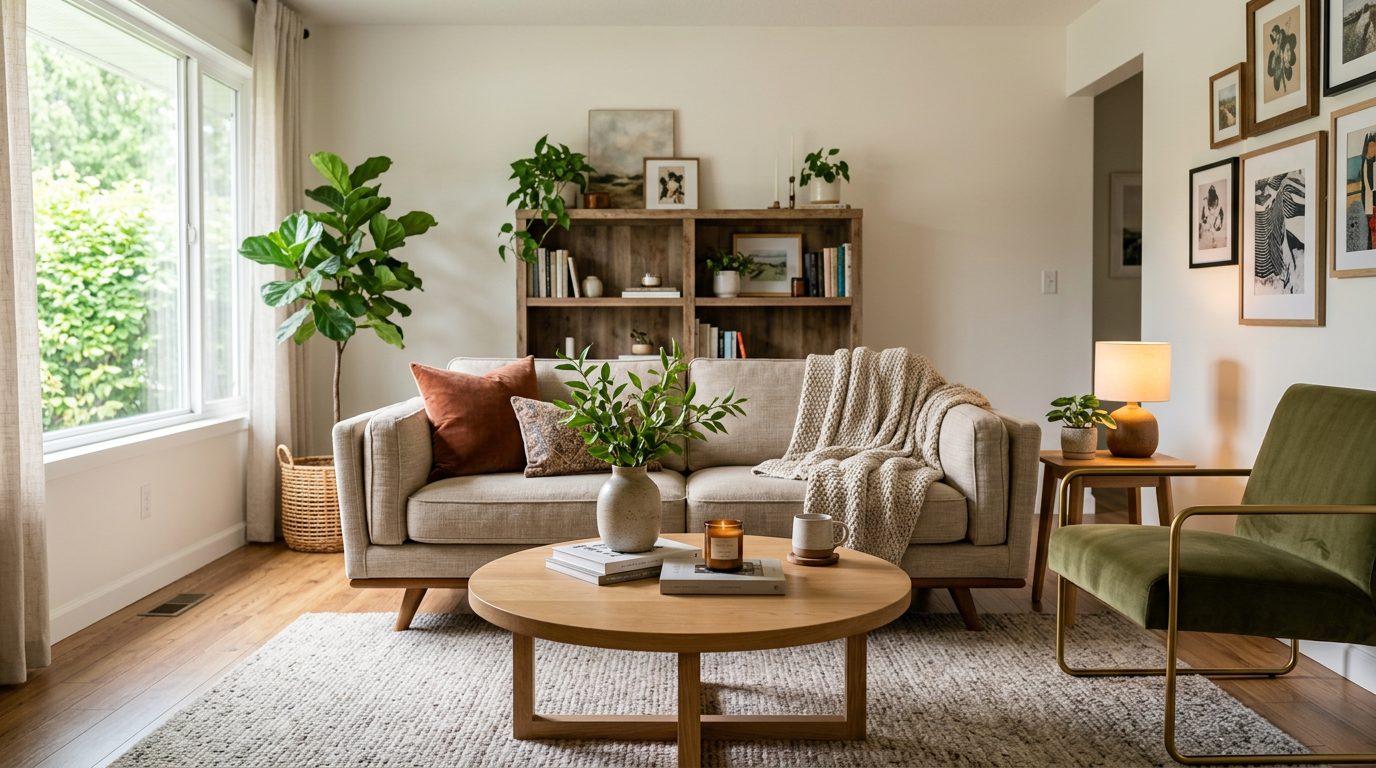
- Strategic Allocation: Spend 40-50% of your budget on the sofa, as it is the most used item.
- Splurge on Durability: Invest in high-quality upholstery and rug fibers for longevity.
- Save on Accents: Side tables, lamps, and throw pillows can be sourced from budget-friendly retailers.
- Avoid Red Flags: Learn the signs of poor construction to avoid wasting money on fast furniture.
The $3,000 Living Room Furniture Checklist: How to Allocate Your Budget
When you are living room furniture on a budget, having a clear checklist prevents overspending. A $3,000 budget is more than enough to create a cohesive, comfortable space if you divide your funds intentionally. Instead of trying to spend equally across all categories, you should weight your budget toward the items that take the most physical wear.
The Recommended Budget Breakdown
Here is a practical breakdown of how to allocate $3,000 across essential living room pieces:
- The Sofa: $1,200
- The Area Rug: $400
- Coffee Table: $200
- Side Tables (2): $100 ($50 each)
- Lighting (Floor and Table Lamps): $200
- Accent Pillows and Decor: $200
- Tax and Delivery Buffer: $700
Notice that the sofa and rug take up more than half of the actual product budget. This leaves a healthy buffer for taxes, shipping fees, and unexpected costs, ensuring you do not blow your $3,000 cap.
Where to Splurge: Prioritizing Quality and Longevity
Knowing where to splurge is the most critical step in learning how to furnish a living room cheaply but beautifully. You should allocate more funds to items that endure daily physical stress and form the structural foundation of your room's design.
The Sofa: Your Anchor Piece ($1,200)
The sofa is the centerpiece of your living room. It bears the weight of daily lounging, pets, and guests. Spending around $1,200 allows you to step away from flimsy fast-furniture and enter the realm of affordable quality furniture with solid wood frames and durable fabrics.
Look for frames made from kiln-dried hardwood, such as oak or maple. Avoid frames made of particleboard or plastic, as they will warp and crack. For upholstery, a tight weave synthetic blend or performance fabric like olefin or acrylic offers excellent stain resistance without the premium price tag of linen or velvet.
The Area Rug: Foundation and Fiber ($400)
An area rug grounds your space and takes an immense amount of foot traffic. While it is tempting to buy a $100 rug from a big-box store, spending $400 allows you to purchase a rug that will not shed, flatten, or fall apart within a year.
At this price point, you can afford a high-quality wool blend or a premium synthetic fiber like solution-dyed acrylic. These materials bounce back from crushing and hide dirt well. A hand-tufted wool rug from a reputable retailer will provide a plush feel and visual depth that cheap machine-made synthetics simply cannot match.
Where to Save: Safe Shortcuts for Budget Living Room Furniture
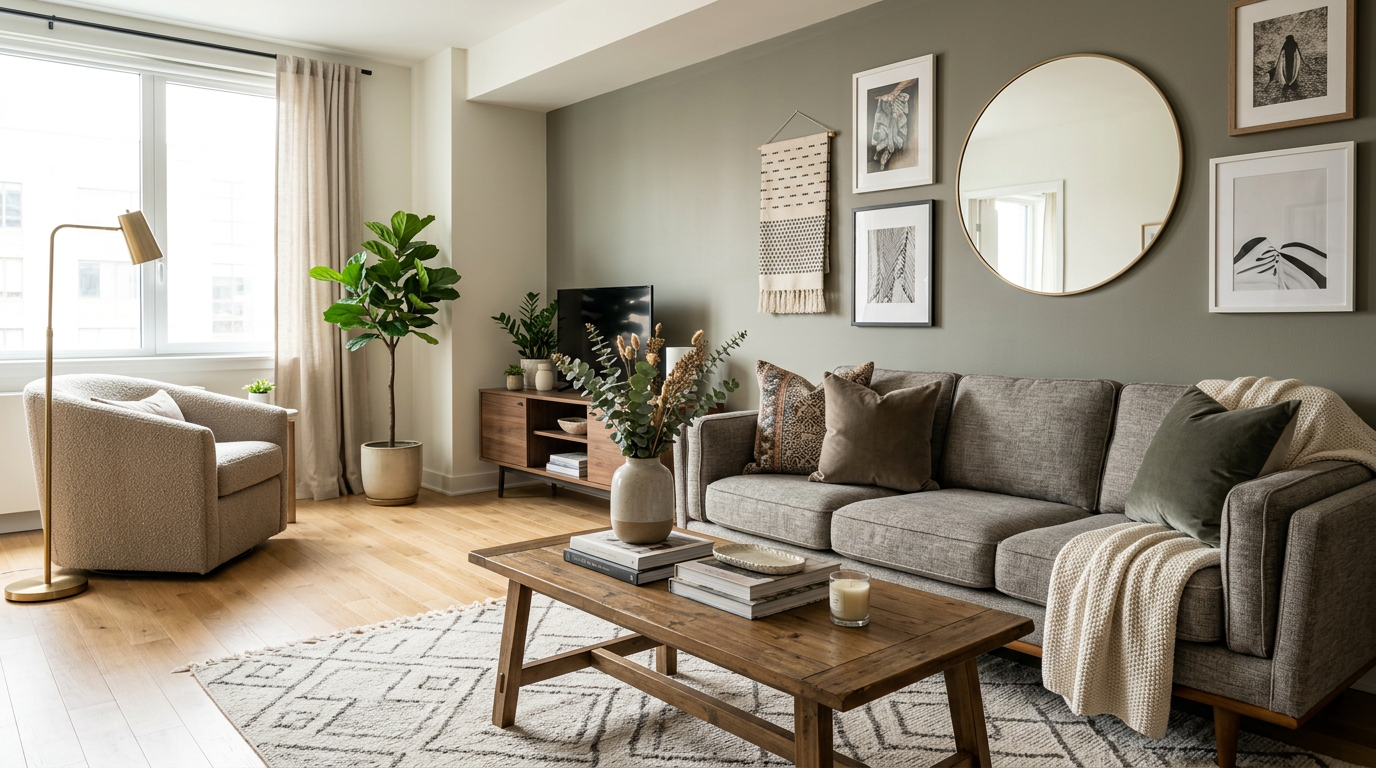
While you want to invest in your sofa and rug, other items in your living room furniture checklist are prime candidates for cost-cutting. These pieces do not endure heavy daily use, making them the perfect place to find safe shortcuts.
Coffee and Side Tables ($300 Total)
You do not need to spend a fortune on tables. A $200 coffee table and two $50 side tables can look incredibly chic. The key is choosing simple, minimalist designs that do not try to mimic expensive materials.
For example, a solid pine or mango wood coffee table with hairpin legs offers a mid-century modern look at a fraction of the cost of walnut. For side tables, consider metal accent tables or simple drum tables made of engineered wood with a decent veneer. Since these surfaces only hold drinks and books, they do not require the structural integrity of a sofa.
Lighting: Floor and Table Lamps ($200)
Lighting is an area where you can easily save. A stylish floor lamp and a matching table lamp can easily be sourced for under $200 total. Focus on the shade and the silhouette rather than the brand. A simple black or brass metal pole with a linen drum shade will look timeless and expensive, regardless of where you buy it.
Accent Pillows and Decor ($200)
Throw pillows, blankets, and wall art are the finishing touches that make a room feel lived-in. Because these items are purely decorative and easily replaceable, this is where you should spend the least. You can find trendy, attractive decor at major home goods stores for a fraction of the cost of designer brands. Swap these out seasonally or when you want a refresh, without feeling guilty about the cost.
Best Retailers for Affordable Quality Furniture
Finding the right retailers is essential when you want to furnish a living room under $3,000. Different stores excel at different price tiers and product categories.
Mid-Tier Brands for Sofas and Rugs
For your sofa, look at brands like Article, West Elm (sale items), or Crate & Barrel (outlet). These retailers frequently offer solid wood frames and high-quality upholstery in the $1,000 to $1,500 range. For rugs, Ruggable offers practical, washable options, while Lulu and Georgia or Rugs USA have excellent sales on wool and synthetic blends that fit a $400 budget.
Budget-Friendly Finds for Tables and Decor
When shopping for tables, lighting, and decor, retailers like IKEA, Target (Project 62 line), and World Market are your best friends. IKEA offers unmatched value for simple, solid wood side tables. Target's in-house brands provide trendy lighting and decor that look far more expensive than their price tags. World Market is excellent for globally inspired coffee tables and unique accent pieces that add character to your space.
Red Flags: Signs of Poor Construction at Any Price
Even when shopping for budget living room furniture, you must avoid pieces that will fail prematurely. Knowing the red flags of poor construction will save you from having to replace items in a few months.
Sofa Red Flags
When evaluating a sofa, lift one corner about six inches off the ground. The opposite front leg should lift as well. If it stays on the ground, the frame is weak and lacks corner blocks. Additionally, avoid sofas with cushions that are entirely filled with loose polyurethane foam without a protective core or down wrap—they will lose their shape within months.
Rug and Table Red Flags
For rugs, avoid jute if you want something soft underfoot, and beware of viscose, which turns yellow when exposed to water. For tables, check the joints. If you see visible staples or plastic brackets holding the legs to the apron, walk away. Look for metal brackets or, ideally, dowel and screw joints.
How to Furnish a Living Room Cheaply Without Looking Cheap
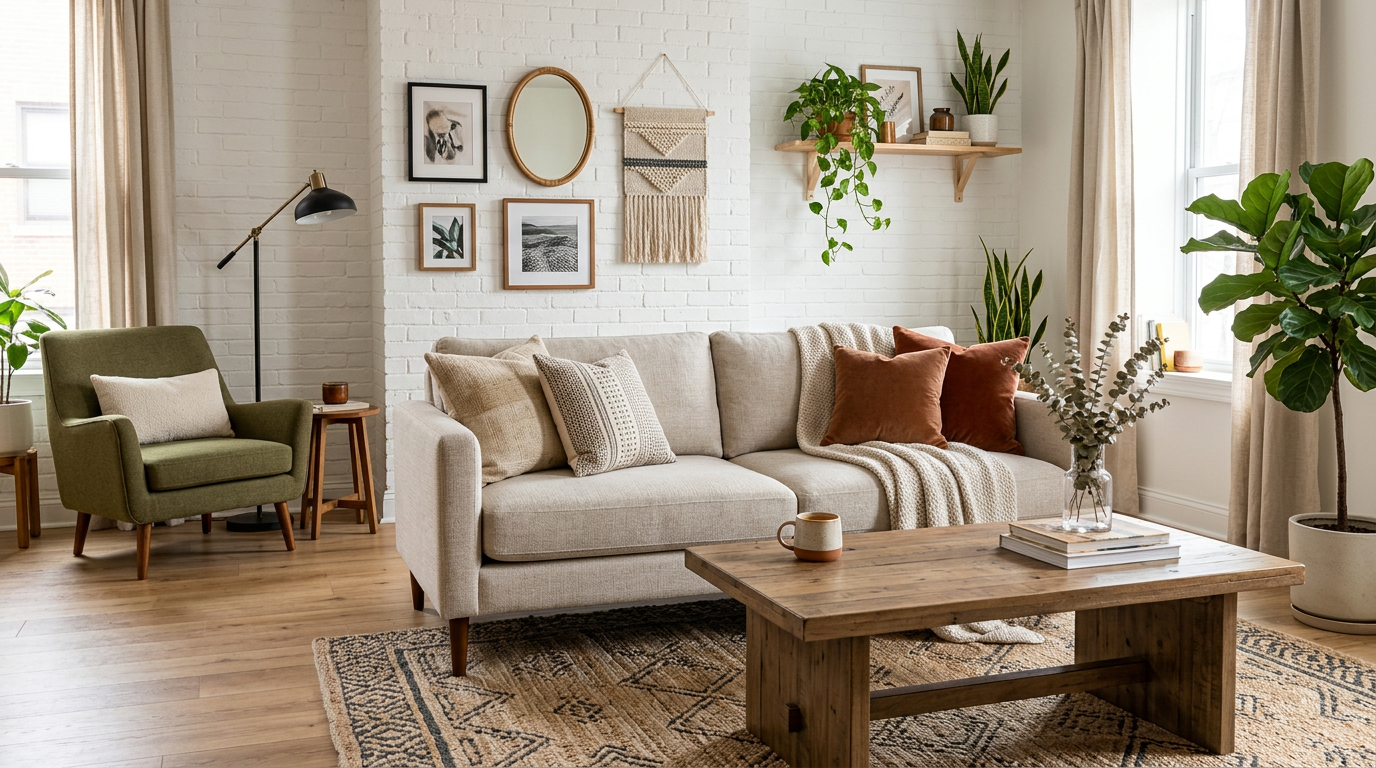
The final step in creating a high-end look on a budget is styling. How you put the pieces together matters just as much as the pieces themselves.
Styling Tips to Elevate Budget Pieces
- Layer Your Rugs: If you cannot afford a large, high-quality wool rug, buy a large, inexpensive natural fiber rug (like jute or seagrass) and layer a smaller, plush wool rug on top.
- Upgrade Hardware: If you buy an inexpensive console or side table, swap out the factory knobs for brass or ceramic pulls from a hardware store.
- Stuff Your Pillows: Buy pillow covers and separate down-alternative inserts. Overstuffing a pillow cover makes it look plump and luxurious, whereas pre-stuffed budget pillows often look flat.
- Conceal Cords: Nothing cheapens a room faster than visible lamp cords. Use cord covers or route them behind furniture to maintain a clean, intentional look.
FAQ: Furnishing a Living Room on a Budget
Can I get a good quality sofa for under $1,200?
Yes, you can. While you will not get premium top-grain leather or 8-way hand-tied springs, $1,200 is enough to buy a sofa with a kiln-dried hardwood frame, high-density foam cushions, and a durable performance fabric. Look for direct-to-consumer brands that cut out the showroom middleman.
What is the most important piece to invest in?
The sofa is the most important investment. It receives the most daily use, dictates the seating arrangement, and is typically the largest visual element in the room. A sagging, uncomfortable sofa will ruin the feel of the space, no matter how nice the other decor is.
How can I make my living room look more expensive?
To make your living room look expensive, focus on lighting, texture, and scale. Ensure your rug is large enough to sit under the front legs of your furniture. Mix textures like velvet, linen, and wood to add depth. Finally, use warm, dimmable lighting rather than harsh overhead bulbs to create a cozy, curated atmosphere.
Conclusion: Your Next Steps to a Beautiful Living Room
Furnishing a living room under $3,000 is entirely achievable when you prioritize your spending. By allocating your funds toward a durable sofa and a quality rug, while taking safe shortcuts on tables and decor, you build a room that is both beautiful and built to last. Remember to watch for construction red flags and shop from retailers that specialize in your specific price tier for each item.
Ready to start designing? Take your living room measurements, outline your budget using the checklist above, and begin researching your sofa options. Your dream living room is well within reach.
To compare living-room pieces within a real budget, start with the lounge furniture range and add from the dining furniture range if you are furnishing both spaces.